In my years of practice as a physical rehabilitation specialist in New York, I’ve seen how frustrating mealtime can become for those living with Parkinson’s disease, essential tremors, or post-stroke recovery. When your hands don’t cooperate, something as simple as eating soup or a salad can feel like an impossible task.
Adaptive utensils are engineered to counteract these tremors through two main methods: weighting (to steady the hand) and stabilization technology (to cancel out the shake).
Based on clinical effectiveness and ease of use, here are my top 5 recommendations for adaptive silverware in 2026.
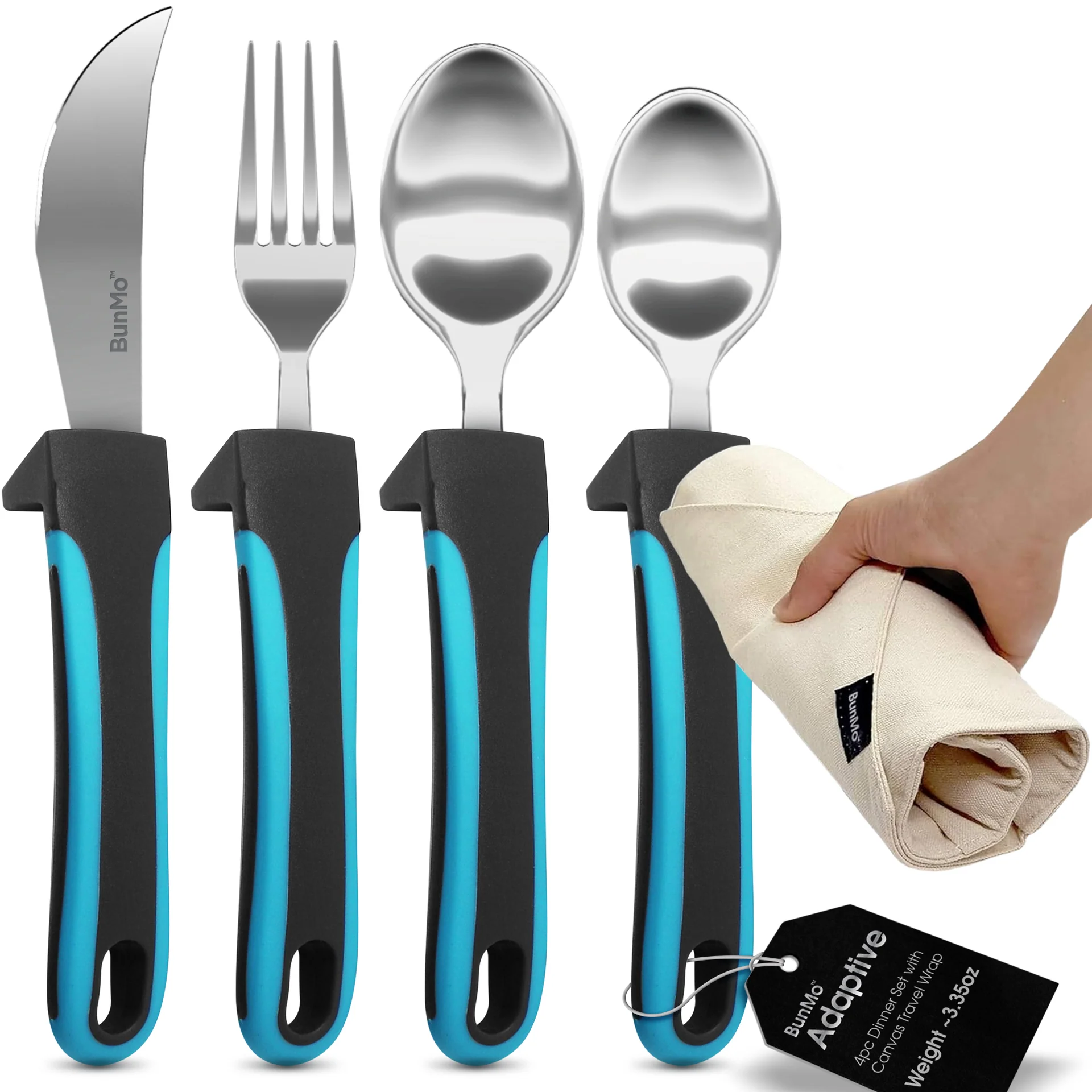
1. The Clinical Choice: BunMo Weighted Silverware (4-Piece Set)
This is the most “natural-looking” set I recommend to my patients. It looks like high-quality stainless steel cutlery but hidden inside is a significant weight.
-
Why I Recommend It: Each piece weighs approximately 7 ounces. This added weight provides sensory feedback to the brain and helps dampen minor to moderate tremors. Unlike “clinical-looking” grey plastic tools, these allow seniors to dine with dignity at a restaurant without drawing unwanted attention.
-
Pros: Sleek design, dishwasher safe, includes a travel roll-up bag.
-
Cons: Might be too heavy for seniors with severe muscle weakness (sarcopenia).
-
Best For: Essential tremors and early-stage Parkinson’s.
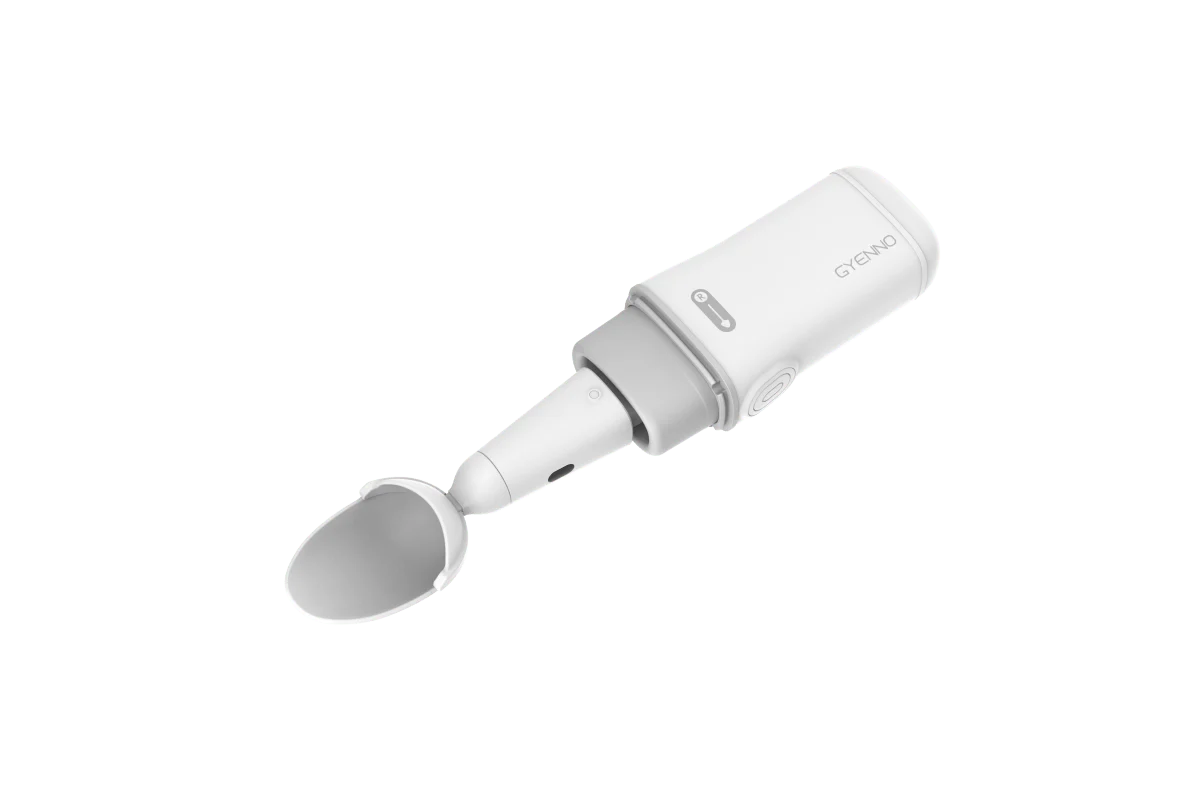
2. Best for High Tech: Gyenno Bravo Twist (Stabilizing Spoon & Fork)
If weighted utensils aren’t enough, it’s time for active stabilization. The Gyenno Bravo is a “smart” utensil that uses high-speed sensors to cancel out tremors.
-
Why I Recommend It: It electronically detects the direction of the shake and moves the spoon head in the opposite direction, keeping the food level. The “Twist” feature is particularly brilliant for eating spaghetti or noodles, which are notoriously difficult for those with Parkinson’s.
-
Pros: Cancels up to 85% of tremors; rechargeable; very effective for severe shakes.
-
Cons: Expensive; requires charging; small spoon bowl size.
-
Best For: Severe Parkinson’s tremors.
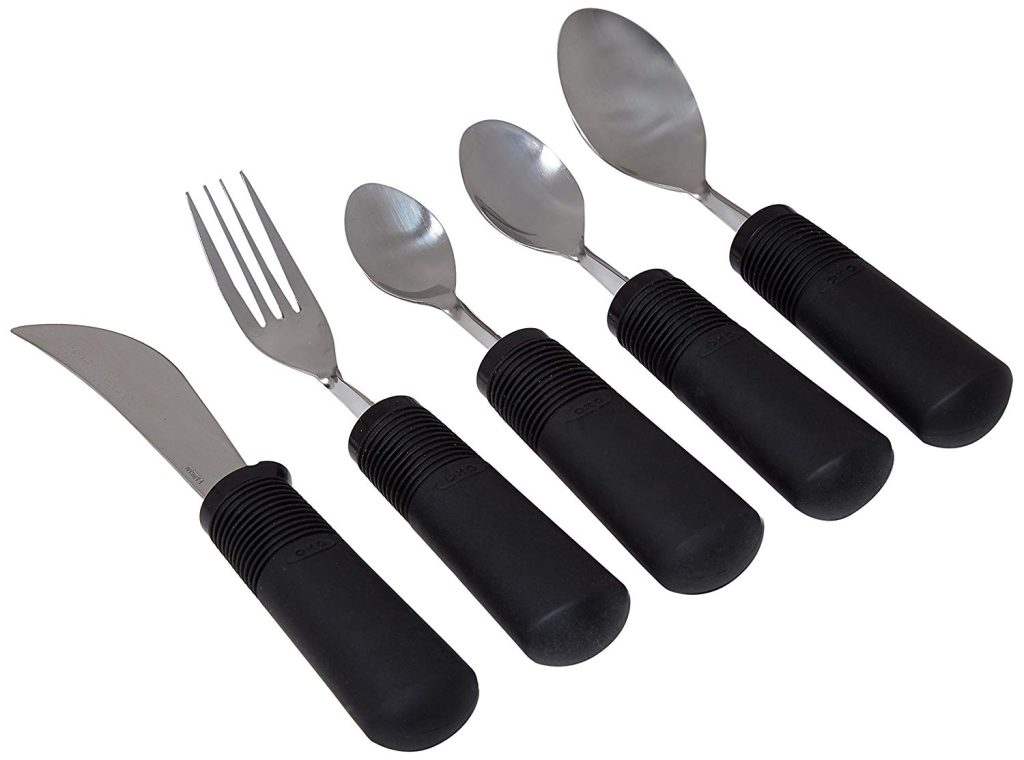
3. Best for Limited Grip: Vive Foam Handle Utensils
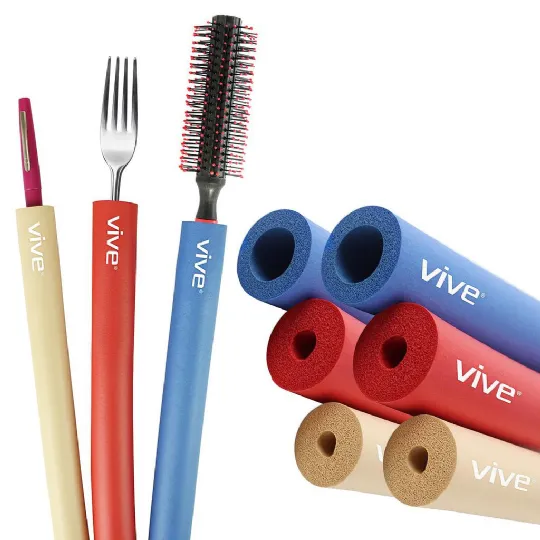
For many of my patients, the problem isn’t just the shake—it’s the inability to close their hand around a thin handle due to arthritis.
-
Why I Recommend It: These utensils feature extra-wide, ribbed foam handles. They require much less “grip force” to hold securely. The built-in straps can also be adjusted so the utensil stays in the hand even if the grip is completely released.
-
Pros: Extremely lightweight, very affordable, soft-touch material.
-
Cons: Foam can degrade over time if washed in high-heat industrial dishwashers.
-
Best For: Seniors with both tremors and severe arthritis or limited dexterity.
4. Best for Versatility: Special Supplies Bendable Weighted Utensils
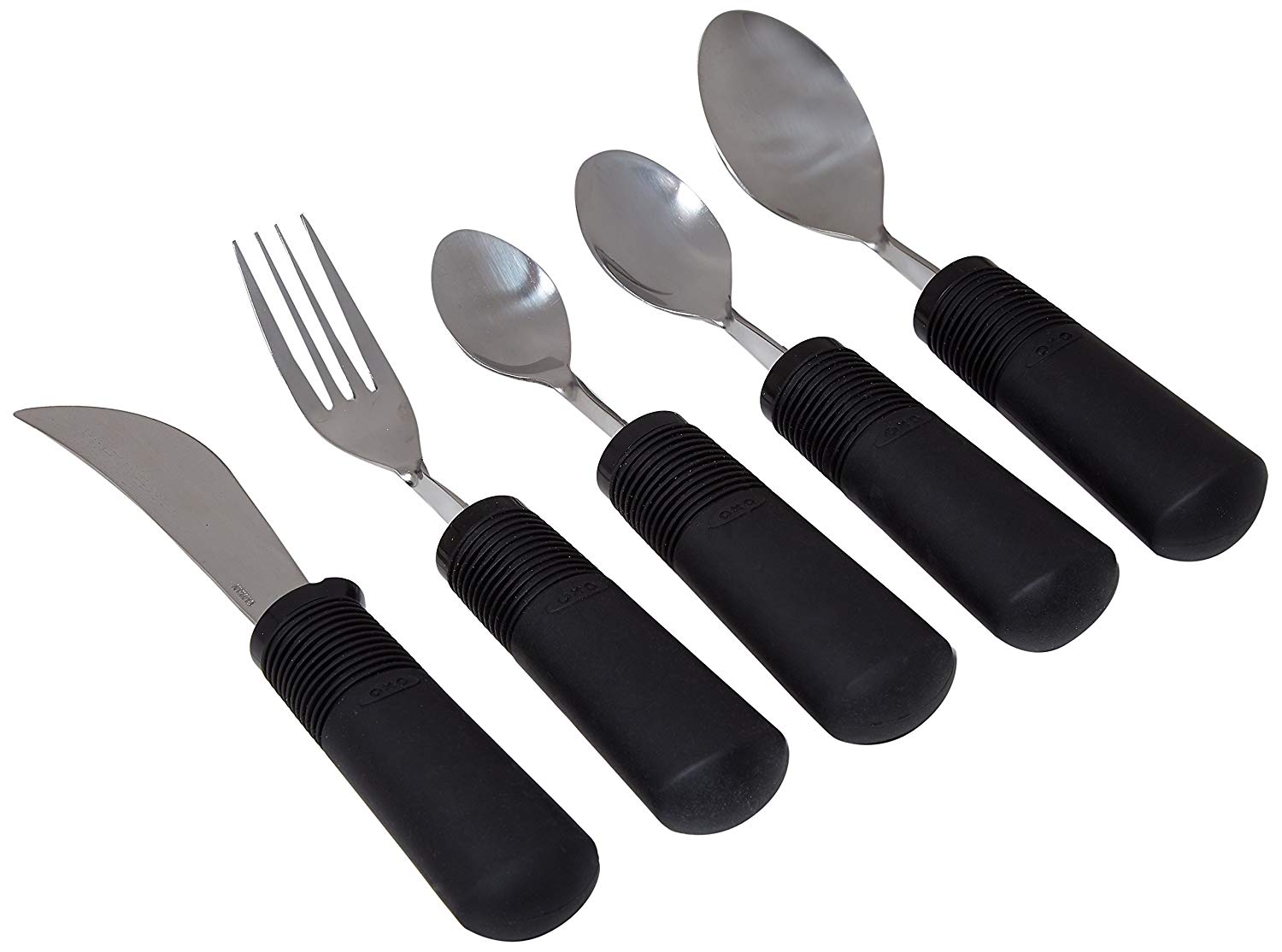
Sometimes, the angle of the wrist is the biggest obstacle. These utensils allow you to bend the metal neck to the left or right.
-
Why I Recommend It: As a PT, I often find that “angling” the spoon towards the mouth reduces the amount of elbow and shoulder movement needed, which in turn reduces the intensity of the tremor. These combine the benefits of weighting with a customizable angle.
-
Pros: Non-slip rubber handles; customizable bend; great value for a full set.
-
Cons: Bending the metal requires some strength (usually done by a caregiver).
-
Best For: Stroke recovery or seniors with limited wrist range of motion.
5. Best for Deep Tremors: Liftware Steady Starter Kit
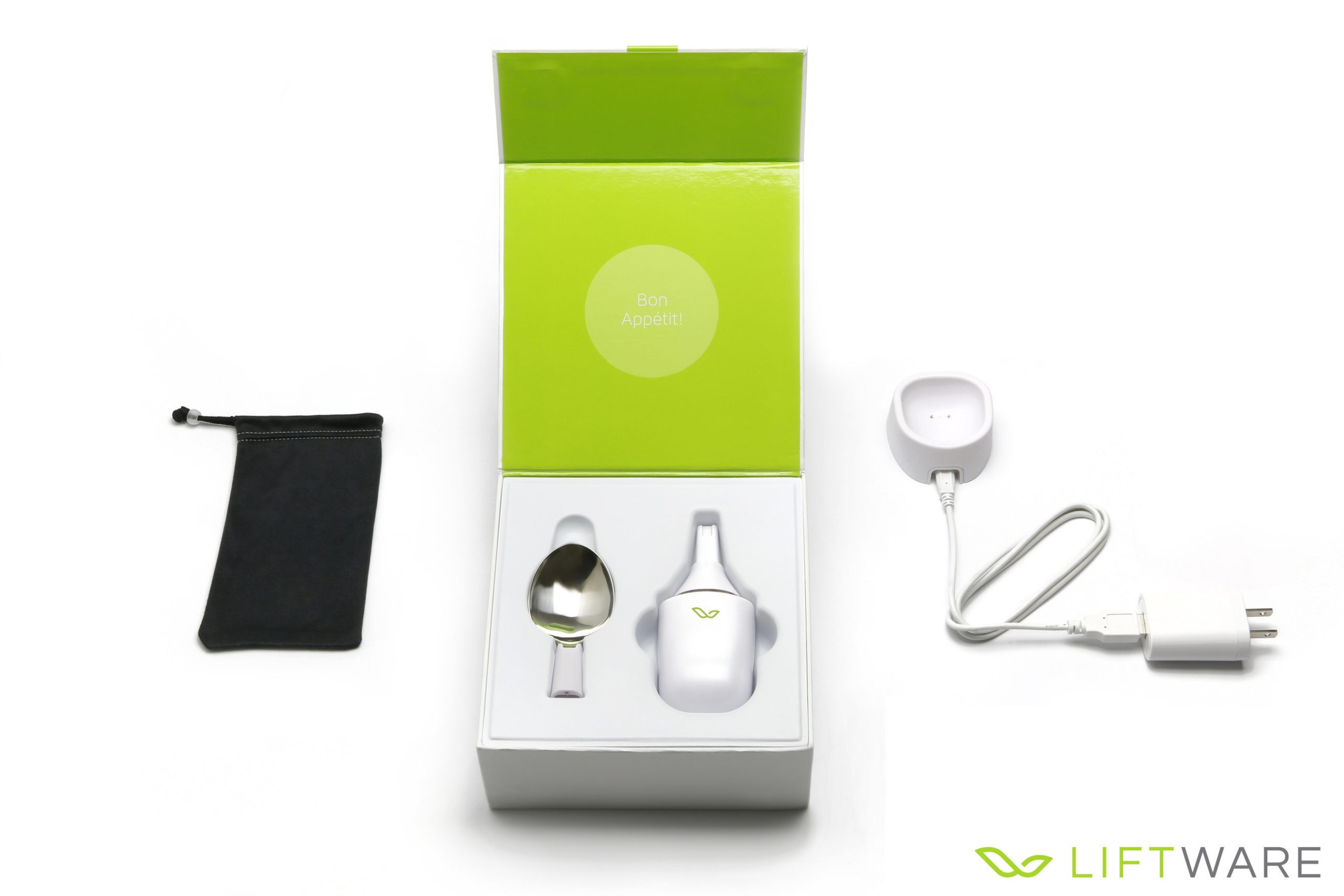
Liftware is the pioneer in this space. Similar to Gyenno, it uses active stabilization technology.
-
Why I Recommend It: The sensors in the handle distinguish between a tremor and the intentional movement of bringing the spoon to the mouth. It’s incredibly intuitive. I’ve seen patients who haven’t been able to eat cereal in years regain that ability in one session with a Liftware spoon.
-
Pros: Very high build quality; proven clinical results.
-
Cons: High price point; attachments (fork, soup spoon) often sold separately.
-
Best For: Parkinson’s patients who prioritize the most established technology.
Joshua’s Dining Success Tips:
To get the most out of your adaptive utensils, consider these three clinical “hacks”:
-
Use a Heavy Cup: Just like weighted silverware, a heavy, two-handled mug can significantly reduce spills while drinking.
-
The “Scoop Plate” Secret: Pair these utensils with a “scoop plate” (a plate with one high, curved edge). This allows the user to push food against the wall of the plate and onto the spoon without it sliding off.
-
Elbow Stabilization: Encourage the user to keep their elbows tucked close to their torso or resting on the table. This “triangulation” provides a more stable base for the hands to work from.
Eat with Confidence. Age at Ease.
Disclosure: As an Amazon Associate, I earn from qualifying purchases. This helps support our mission to provide expert safety advice to seniors and their families.