In my years of conducting home safety evaluations across New York, I’ve noticed that most falls aren’t caused by one major event. Instead, they are the result of “micro-hazards”—small, overlooked details in your daily environment that turn a simple walk into a trip to the Emergency Room.
According to the latest year CDC data, more than 14 million older adults report falling every year. What’s more staggering is that over 80% of these falls occur inside the home.
As a Physical Therapist, my goal is to help you “age-proof” your living space. Here are the five most common culprits I find in American homes today and how to fix them.
1. The “Deceptive” Throw Rug
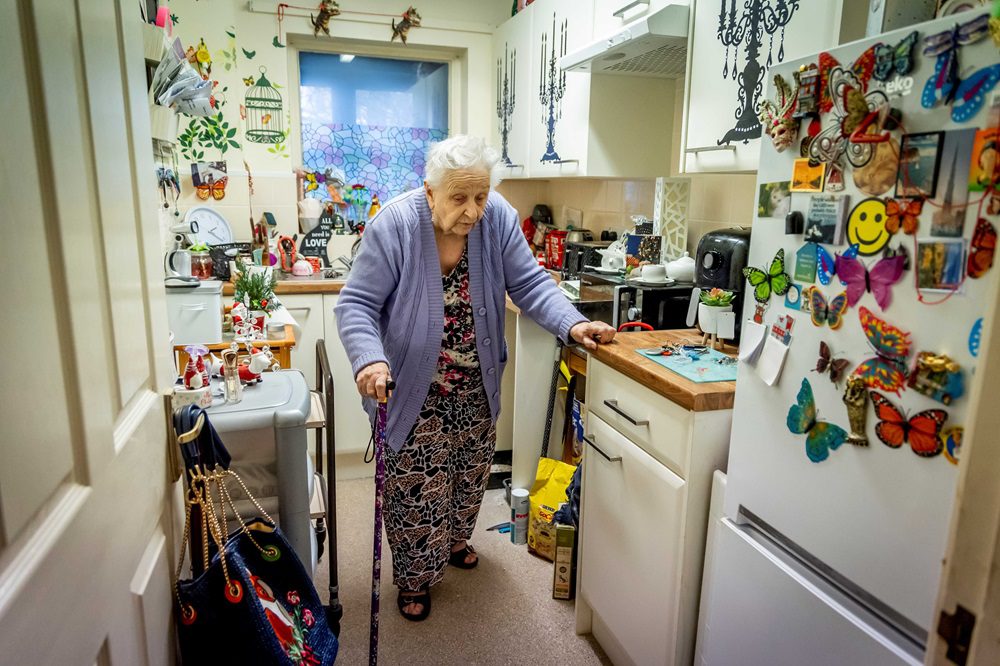
Throw rugs are the #1 enemy of senior mobility. They may look beautiful, but for someone using a walker or someone with a “shuffling” gait (common in Parkinson’s), they are a high-speed trap.
-
The Hazard: Rug edges curl over time, creating a lip that catches a toe or the tip of a cane. They also slide easily on hardwood or tile floors.
-
The PT Solution: The safest option is to remove them entirely. If you must keep them, use heavy-duty double-sided rug tape or a high-quality non-slip rubber backing.
-
Pro Tip: If your rug is thicker than 1/4 inch, it’s too thick. Transitions between flooring types should be as flat as possible.
2. Inadequate “Pathlighting”
Most falls happen between 10 PM and 6 AM. Why? Because our balance depends heavily on our vision. When you wake up in a dark room, your vestibular system (inner ear) has to do all the work, and if it’s weakened by age, you will stumble.
-
The Hazard: Dark hallways, stairs without light switches at both ends, and “glare” from overly bright, unshielded bulbs.
-
The PT Solution: Install motion-sensor LED nightlights along the baseboards from the bed to the bathroom.
-
Pro Tip: Use “warm” amber-colored lights. Blue or bright white light can disrupt your sleep cycle and cause temporary “night blindness” when you turn them off.
3. The “Invisible” Bathroom Slip
The bathroom is the most dangerous zone due to a combination of wet surfaces and “orthostatic hypotension” (dizziness that happens when you stand up too fast from the toilet).
-
The Hazard: Using towel racks or sink edges as “grab bars.” Towel racks are designed to hold 5 lbs of fabric, not 150 lbs of human weight. They will rip out of the wall when you need them most.
-
The PT Solution: Install ADA-compliant grab bars that are screwed into wall studs.
-
Pro Tip: Add a non-slip loofah mat inside the tub and a weighted non-slip mat outside the tub. Never step onto a towel spread on the floor—it’s like stepping on a banana peel.
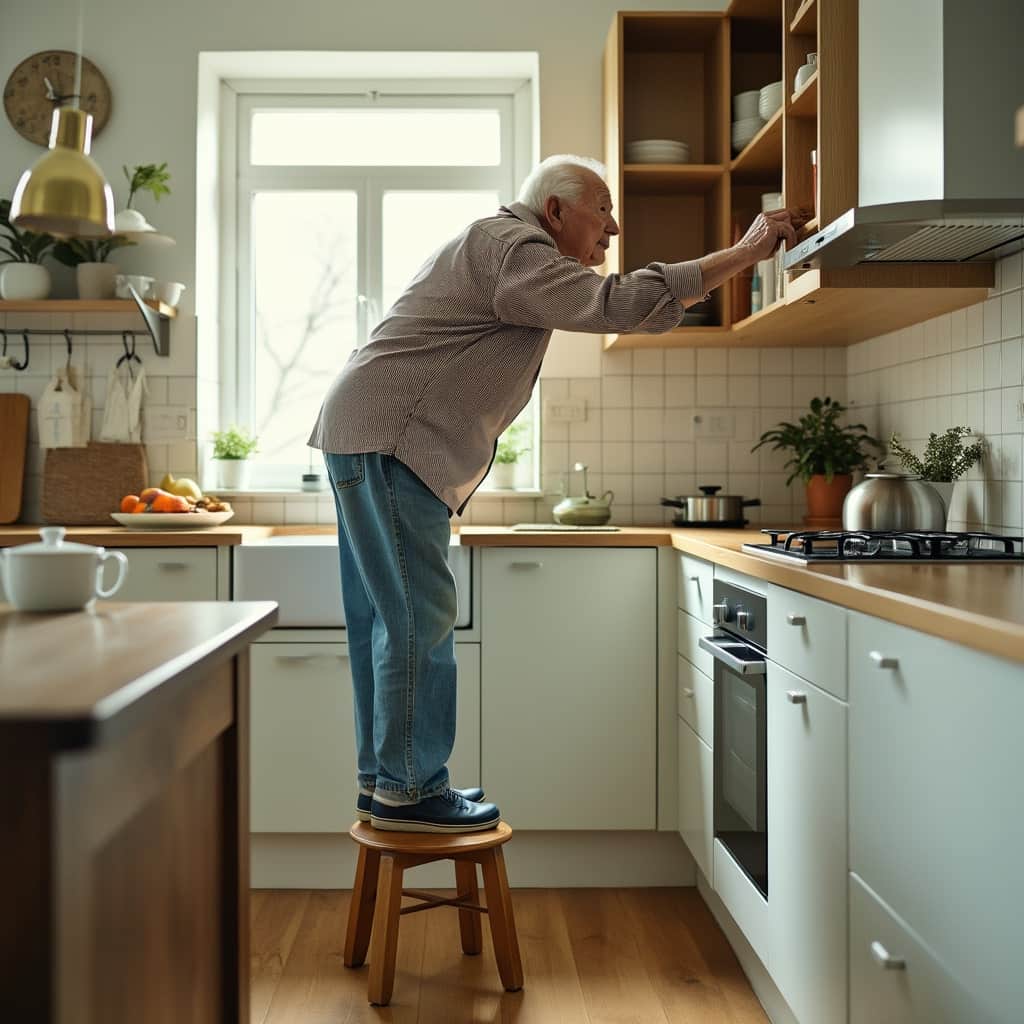
4. High-Reach & Low-Reach Storage
As we age, our center of gravity becomes less stable when we reach above our heads or bend deep to the floor.
-
The Hazard: Storing heavy pots or daily medications on high shelves or in deep bottom cabinets. This leads to overstretching or losing balance while looking down.
-
The PT Solution: Move all “daily use” items to waist-level storage.
-
Pro Tip: Use a “Lazy Susan” in cabinets so you don’t have to reach into the dark back corners, and always keep a high-quality “Reacher Grabber” tool in the kitchen.
5. Trailing Cords and “Clutter Corridors”
Modern homes are filled with electronics, and that means one thing: tangled cords.
-
The Hazard: Lamp cords, phone chargers, and oxygen tubing running across walking paths. Even a thin cord is enough to snag a heel and cause a forward fall.
-
The PT Solution: Use cord organizers or plastic raceways to pin cords to the baseboards.
-
Pro Tip: Clear a “36-inch wide corridor” through every room. This is the standard width needed for a walker or wheelchair to pass through without bumping into furniture.
Joshua’s Final Safety Checklist:
-
[ ] Are all stairs equipped with handrails on both sides?
-
[ ] Are your slippers “backless”? (If yes, replace them with secure, slip-on shoes).
-
[ ] Do you have a phone or medical alert button within reach of the floor?
Spot the Hazard. Stop the Fall. Age at Ease.
Disclosure: As an Amazon Associate, I earn from qualifying purchases. This helps support our mission to provide expert safety advice to seniors and their families.
Read too: 5 Best Medical Alert Systems with Fall Detection (No Monthly Fee)