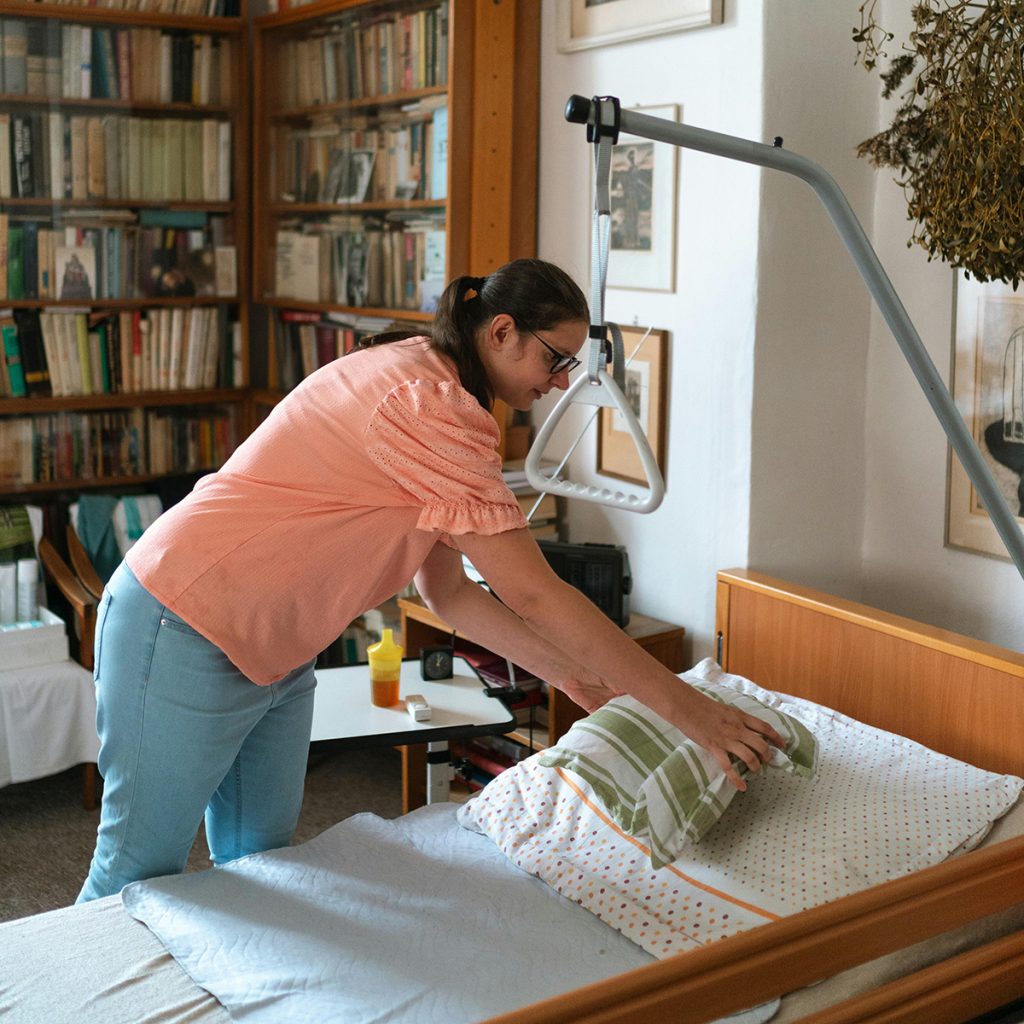

In my years of physical therapy practice in New York, I’ve found that the bedroom is often the most overlooked area for safety modifications. Many seniors struggle with “getting their momentum” to stand up from a soft mattress. Without a solid anchor point, they often grab onto unstable nightstands or pull on their spouse’s arm—both of which are major fall risks.
A Bed Assist Rail (also known as a bed cane or safety rail) provides a stable, ergonomic handle to help you transition from lying to sitting, and sitting to standing. These devices have become more discreet, adjustable, and easier to install without tools.
Here are my top 5 expert-vetted bed rails to help you “Aging at Ease” and maintain your independence.
1. The Best Overall: Stander Mondo Medical Bed Rail
Stander is the industry leader in this category, and the Mondo model balances a modern look with heavy-duty stability.
-
Why I Recommend It: It features an “Organizer Pouch” that hangs right on the rail. This is a critical safety feature because it keeps phones, glasses, and remotes within reach, preventing the senior from overreaching or leaning out of bed.
-
Pros: Sleek black design (doesn’t look “hospital-like”), supports up to 300 lbs, height-adjustable handle.
-
Cons: Slightly higher price point than basic models.
-
Best For: Seniors who want a permanent, stylish, and highly functional support handle.
2. Best for Stability: Vive Bed Assist Rail
If you are worried about the rail “sliding” out from under the mattress, the Vive model offers the most secure anchoring system I’ve tested.
-
Why I Recommend It: It features an extra-long “safety strap” that wraps around the entire bed frame or box spring. This prevents the rail from shifting even if a person applies significant lateral (sideways) pressure while standing up.
-
Pros: Includes a non-slip foam grip, tool-free assembly, very affordable.
-
Cons: The base board is slightly thicker, which might be felt through very thin mattresses.
-
Best For: Seniors with significant balance issues who need a very “stiff” and unmoving anchor.
3. Best for Mobility: Medline Bed Assist Bar with “Legs”
For seniors who need more than just a handhold, this model features two legs that extend to the floor for added weight distribution.
-
Why I Recommend It: By transferring the weight directly to the floor rather than just the mattress, this rail can support more downward force. It’s perfect for patients recovering from hip or knee replacements who need to “push off” with significant force.
-
Pros: Exceptional weight capacity, legs adjust to different bed heights, very sturdy.
-
Cons: The legs can be a minor trip hazard if not positioned correctly; doesn’t work well with adjustable beds.
-
Best For: Post-surgical recovery and seniors with severe lower-body weakness.
4. Best for Travel: Able Life Bedcane
If you are visiting family or staying in a hotel, you shouldn’t have to sacrifice your safety. The Bedcane is designed to be portable.
-
Why I Recommend It: It folds down flat and fits into a standard suitcase. Despite its small size, it provides a surprisingly solid grip. It’s “no-frills” but gets the job done anywhere there is a mattress.
-
Pros: Extremely lightweight (under 5 lbs), takes up very little space, easy to “tuck away” during the day.
-
Cons: Not intended for heavy bariatric use.
-
Best For: Active seniors who travel frequently or stay in guest rooms.
5. Best for Dual Purpose: Drive Medical Lifestyle Home Bed Assist
This rail is unique because it offers a wider “M-shaped” handle, allowing for multiple grip positions.
-
Why I Recommend It: The M-shape allows the user to use two hands for “step-by-step” climbing from a lying position to a seated one. It also acts as a partial “side rail” to prevent rolling out of bed at night.
-
Pros: Multiple grip heights, very wide base for stability, easy to clean.
-
Cons: Takes up more “visual space” next to the bed.
-
Best For: Seniors who suffer from night-time restlessness or those who need a two-handed grip for standing.
Joshua’s PT Setup Tips for Safety:
-
The “Hip-Line” Rule: Position the rail so the handle is roughly aligned with your hips when you are lying down. This allows you to use it for “log-rolling” (turning over) as well as sitting up.
-
Check the Gap: Ensure there is no gap between the rail and the mattress. A gap can be an “entrapment hazard” for limbs. Always use the provided safety straps to pull the rail tight against the mattress.
-
Firmness Matters: These rails work best with traditional mattresses and box springs. If you have a very light memory foam mattress, you must use a model with a safety strap to keep it from tipping.
Rise with Strength. Aging at Ease.
Review: Best Hospital Beds for Home Care — Manual vs. Electric
Disclosure: As an Amazon Associate, I earn from qualifying purchases. This helps support our mission to provide expert safety advice to seniors and their families.