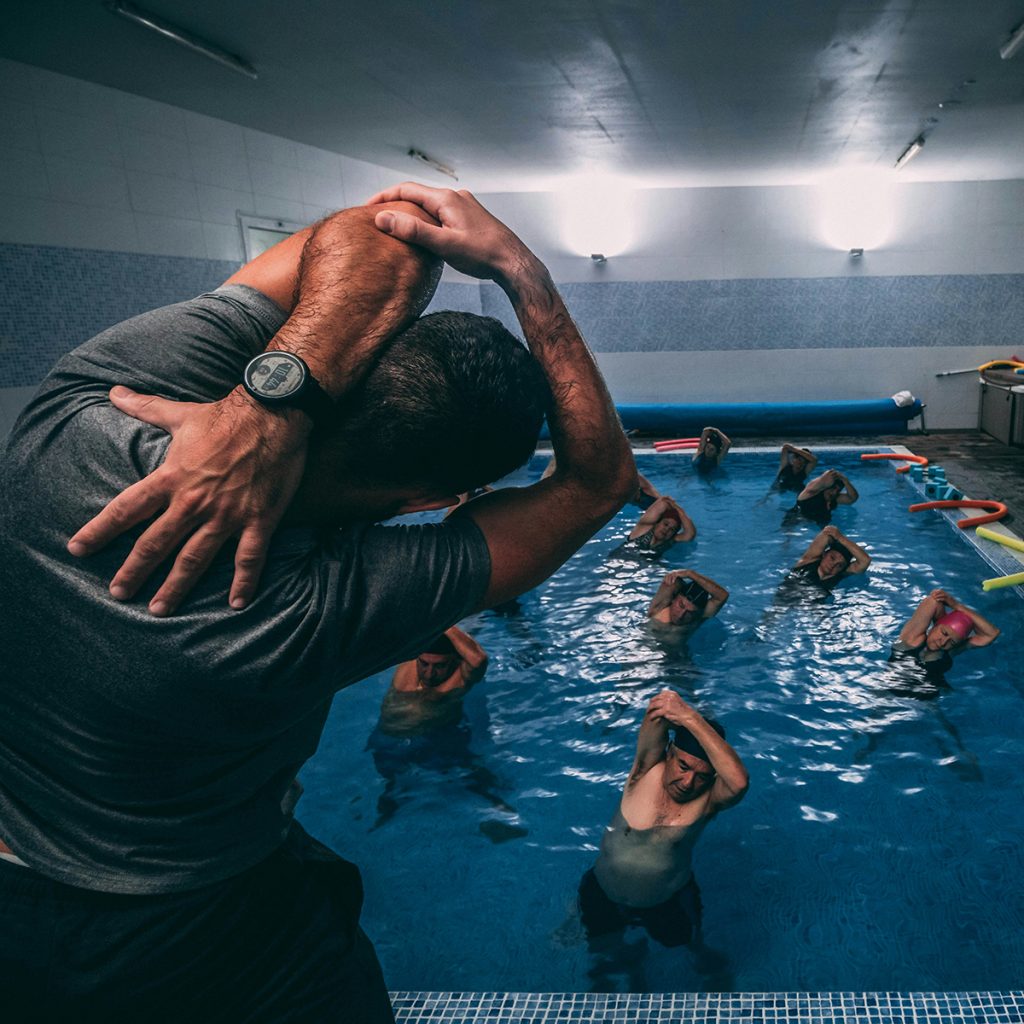
In my New York clinic, I often see patients who want to be active but feel trapped by their own joints. When every step on pavement feels like bone-on-bone friction, traditional walking or jogging becomes a chore rather than a benefit. This is where I prescribe the “Liquid Gym.”
Water aerobics is the ultimate low-impact workout because of buoyancy. When you are chest-deep in water, the pool supports about 90% of your body weight. This means a 180-pound person only “weighs” 18 pounds in the water, virtually eliminating the impact on knees, hips, and the spine.
At Aging At Ease, we consider the pool to be a fountain of youth for mobility. Here is why you should consider jumping in.
1. Zero Impact, Maximum Resistance
The beauty of water is its “isokinetic” nature. Unlike weights on land, water provides resistance in every direction you move.
-
The Benefit: You get a full-body workout without the “jarring” effect of hitting the ground. If you move your arm through water twice as fast, the resistance doubles. This allows you to control the intensity of your workout perfectly.
-
PT Tip: Use water dumbbells or resistance gloves to increase the surface area and build upper body strength without straining your rotator cuffs.
2. Improved Cardiovascular Health without the Heat
Seniors often struggle with thermoregulation (staying cool during exercise).
-
The Benefit: The water keeps your body temperature stable, preventing the overheating that can lead to dizziness or heart strain. Even though you don’t feel “sweaty,” your heart is working hard, improving circulation and lowering blood pressure.
-
PT Tip: Even simple “pool walking” for 20 minutes can burn as many calories as a brisk walk on land, but with significantly less fatigue the next day.
3. Balance Training in a “Safety Net”
As we discussed in our [Fall Prevention guide], fear of falling is a major barrier to exercise.
-
The Benefit: In the pool, you cannot fall. If you lose your balance, the water supports you, giving you the confidence to perform movements that would be too risky on dry land—like standing on one leg or doing high-knee marches.
-
PT Tip: Use the pool to practice “Dynamic Balance.” The gentle movement of the water around you acts like a “balance challenge” that re-trains your brain and inner ear (vestibular system).
4. Reduced Edema and Swelling
Many of my patients in New York suffer from swollen ankles and poor circulation in the lower legs.
-
The Benefit: Hydrostatic pressure (the pressure water exerts on the body) naturally helps push fluid back toward the heart. It’s like wearing a full-body compression stocking.
-
PT Tip: If you suffer from chronic leg swelling, simply walking and moving your ankles in the deep end can provide immediate relief.
Joshua’s PT Pool Safety Checklist:
-
Invest in Water Shoes: Pool floors can be slippery. High-traction water shoes protect you from slips on the wet tiles and provide extra grip during your exercises.
-
Hydrate anyway: You don’t feel thirsty in the pool because you stay cool, but your body is still losing fluids. Drink a full glass of water before and after your session.
-
The “Temperature Sweet Spot”: Look for pools heated to between 82°F and 88°F (28°C – 31°C). If the water is too cold, your muscles will tense up; if it’s too warm (like a hot tub), it can lower your blood pressure too much during exercise.
Dive In. Feel Light. Aging at Ease.
Disclosure: As an Amazon Associate, I earn from qualifying purchases of pool safety gear. This helps support our mission at Aging At Ease to provide expert advice to seniors.
Read too: Review: 5 Best Resistance Bands for Senior Strength Training