In my professional career in New York, I’ve conducted hundreds of home safety evaluations. One thing I’ve learned is that most falls don’t happen because of a major health crisis—they happen because of a loose rug, a dark hallway, or a missing grab bar.
A Home Safety Audit is a systematic walkthrough of your living space to identify and fix “hidden” hazards. You don’t always need a professional to do this. With a critical eye and a simple plan, you can significantly reduce the risk of injury for yourself or a loved one.
Below is my expert-approved DIY checklist to help you “Age at Ease.” Grab a clipboard, a flashlight, and let’s get started.
Section 1: Exterior & Entrances
Safety starts before you even step inside.
-
[ ] Lighting: Are the walkways, porch, and house numbers well-lit at night?
-
[ ] Steps: Are all steps in good repair? Are there sturdy handrails on both sides?
-
[ ] Thresholds: Is the door threshold low enough to prevent tripping? (If not, consider a rubber threshold ramp).
-
[ ] Packages: Is there a designated spot for deliveries that doesn’t block the walking path?
Section 2: Hallways & Living Areas
These are the high-traffic “arteries” of your home.
-
[ ] The “Floor Test”: Walk through every room. Is there a clear, 36-inch wide path? Remove any clutter, low furniture, or electrical cords crossing the path.
-
[ ] Rugs: Remove all throw rugs or secure them with heavy-duty double-sided tape. (PT Advice: Removal is always safer!)
-
[ ] Lighting: Are there light switches at the entrance of every room? If not, install motion-sensor plug-in lights.
-
[ ] Furniture: Is your favorite chair easy to get out of? (If it’s too soft or low, consider furniture risers).
Section 3: The Kitchen
Focus on reach and fire safety.
-
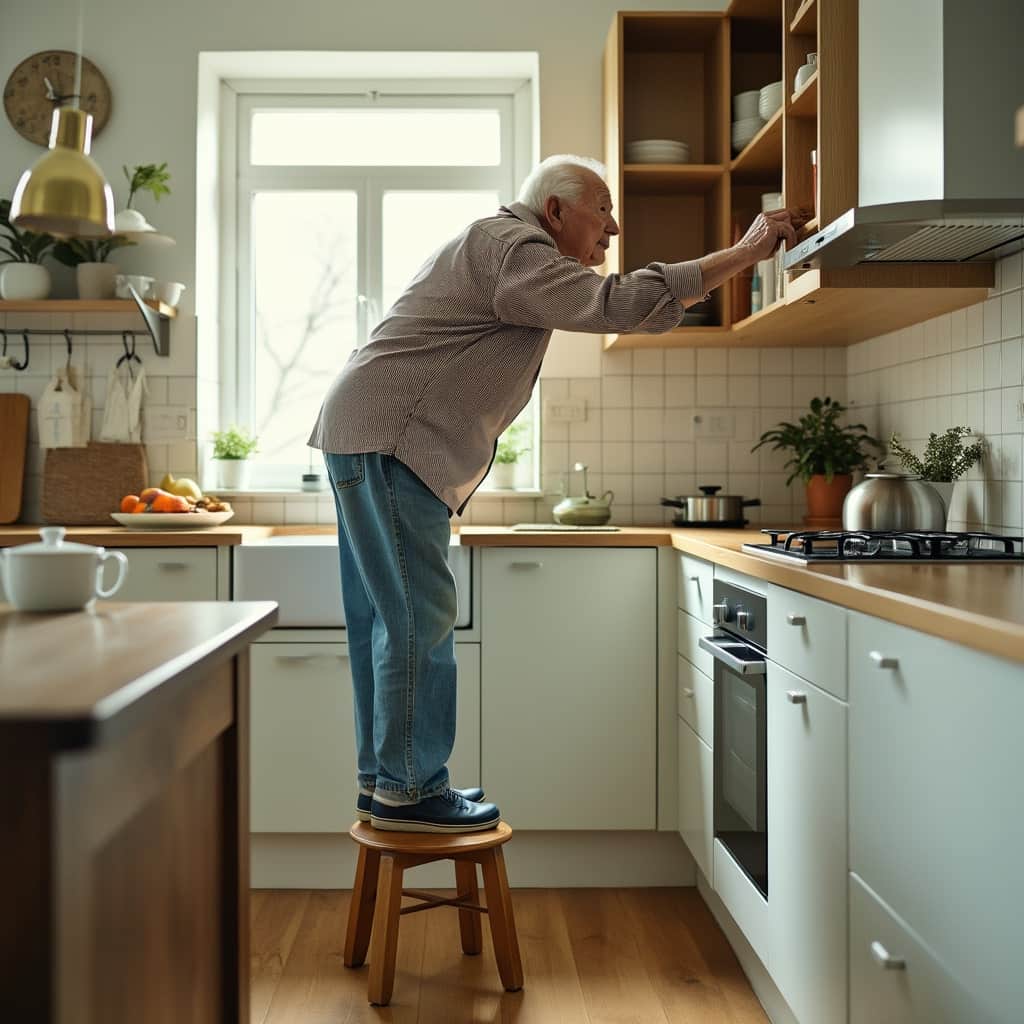
[ ] The “Waist-High” Rule: Move frequently used items (heavy pots, daily dishes, meds) to waist-level shelves or counters.
-
[ ] Lighting: Is there bright task lighting over the stove and cutting areas?
-
[ ] Safety Gadgets: Do you have an automatic stove shut-off device or an electric jar opener to reduce strain?
-
[ ] Spills: Is there a mop or paper towels within easy reach to clean up liquid spills immediately?
Section 4: The Bathroom (The Danger Zone)
Most falls happen here. Pay extra attention.
-
[ ] Grab Bars: Are there permanent, screw-in grab bars in the shower and next to the toilet? (Towel racks do NOT count!)
-
[ ] Floor: Is there a non-slip mat inside and outside the tub?
-
[ ] Height: Is the toilet seat at a comfortable height? (If not, install a raised toilet seat with handles).
-
[ ] Shower Chair: If balance is an issue, is there a stable chair or bench for bathing?
Section 5: The Bedroom
Night-time safety is critical.
-
[ ] Path to Bathroom: Is the path from the bed to the bathroom completely clear and illuminated with nightlights?
-
[ ] Bed Height: Can you sit on the edge of the bed with your feet flat on the floor?
-
[ ] Assist Rails: Is there a bed rail or “bed cane” to help with standing up?
-
[ ] Communication: Is there a phone or a medical alert button on the nightstand within reach of the floor?
Joshua’s PT Professional Tip: The “Test Walk”
Once you’ve completed the audit and made your fixes, perform a “Test Walk.” Walk through your home while carrying a laundry basket or a tray with a cup of tea. If you feel any hesitation, instability, or “tight spots” while your hands are full, that area still needs work.
Identify the Hazard. Fix the Risk. Age at Ease.
Disclosure: As an Amazon Associate, I earn from qualifying purchases. This helps support our mission to provide expert safety advice to seniors and their families.