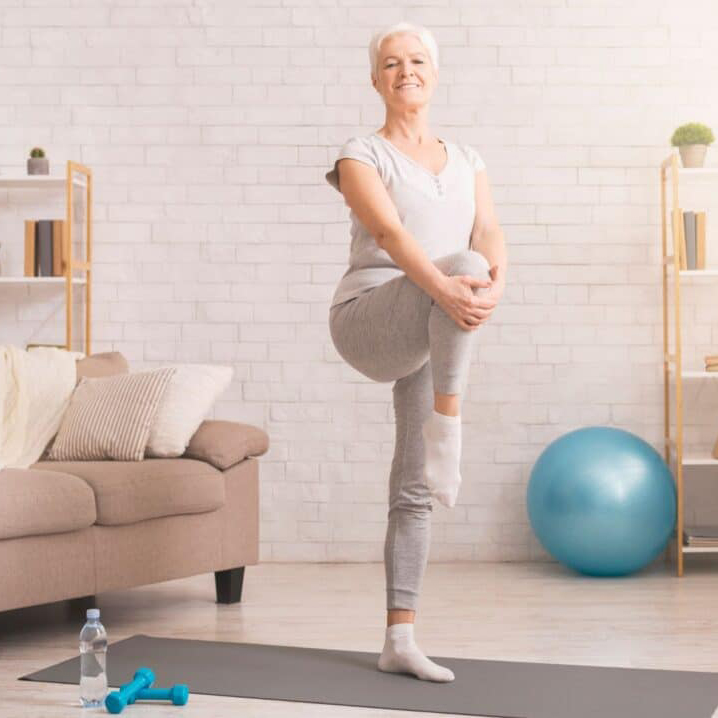
In my New York clinic, I often hear patients say, “Joshua, I want to keep my heart strong, but my knees can’t handle the treadmill anymore.” It’s a common dilemma. After 70, the goal of exercise shifts: we want to keep the heart rate up to strengthen the cardiovascular system, but we must protect the “chassis”—our joints, spine, and feet.
Low-impact aerobics is the answer. It’s defined by one simple rule: at least one foot must stay on the ground at all times. This eliminates the jarring impact of running or jumping while still giving your heart the “workout” it needs to pump blood efficiently and maintain healthy blood pressure.
The American Heart Association emphasizes that even 15–20 minutes of consistent low-impact movement daily can reduce the risk of stroke and heart disease by up to 30%. Here is my PT-approved guide to the best heart-healthy movements for seniors.
1. The “Power Stroll” (Indoor or Outdoor)
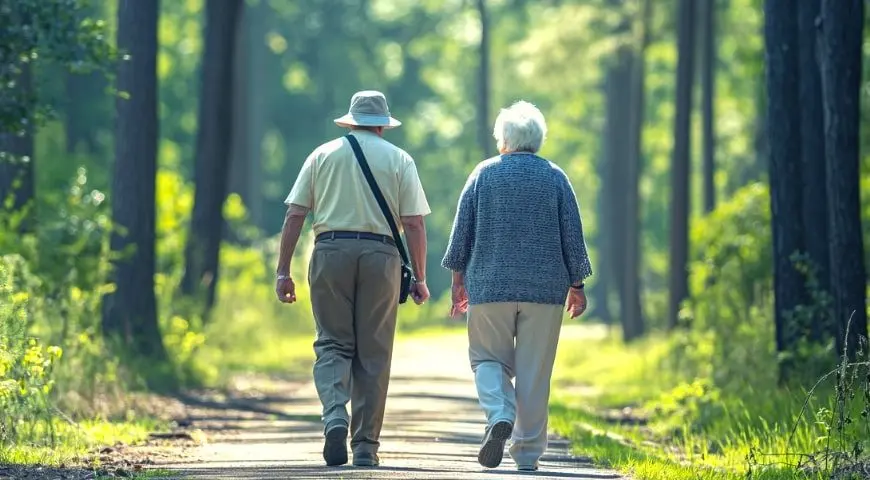
Walking is the most natural form of low-impact aerobics, but to make it “cardio,” we need to pick up the pace just enough to feel slightly breathless.
-
How to do it: Walk at a pace where you can still talk, but you couldn’t sing a song. This is the “Talk Test” for moderate intensity.
-
PT Benefit: It strengthens the heart and the large muscles in the legs, which act as a “second heart” by helping push blood back up to the torso.
-
Tip: If you’re outdoors, use Nordic Walking poles. They engage your arms and core, burning more calories and providing extra stability.
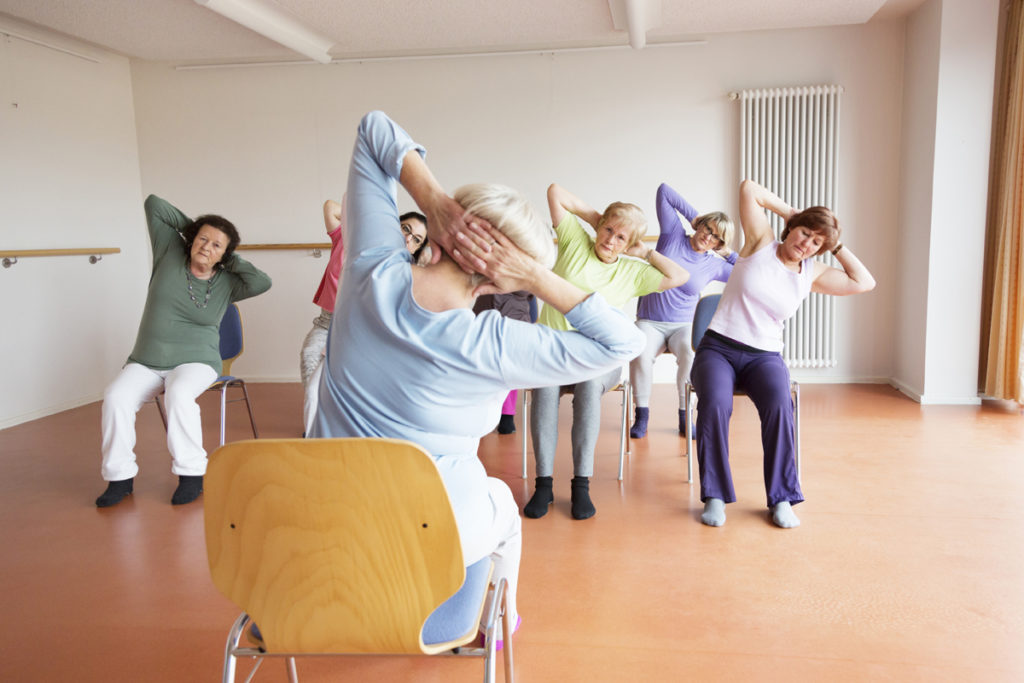
2. Seated Aerobics (Chair Cardio)
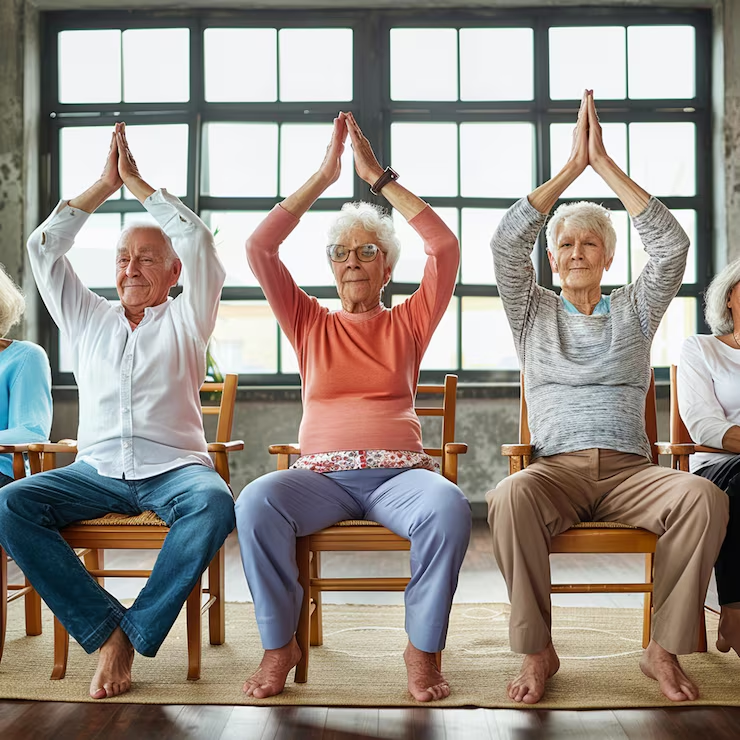
Don’t let limited mobility stop your heart health. You can get an incredible aerobic workout while sitting in a sturdy chair.
-
How to do it: Perform “Seated Marches” (lifting knees high), “Seated Jacks” (moving arms and legs out to the sides like a jumping jack), and “Seated Swims” (reaching forward and pulling back).
-
PT Benefit: It allows for a high heart rate without any risk of falling or joint strain.
-
Tip: Aim for 10 minutes of continuous movement. If you feel your chest getting warm and your breath getting deeper, you’re doing it right!
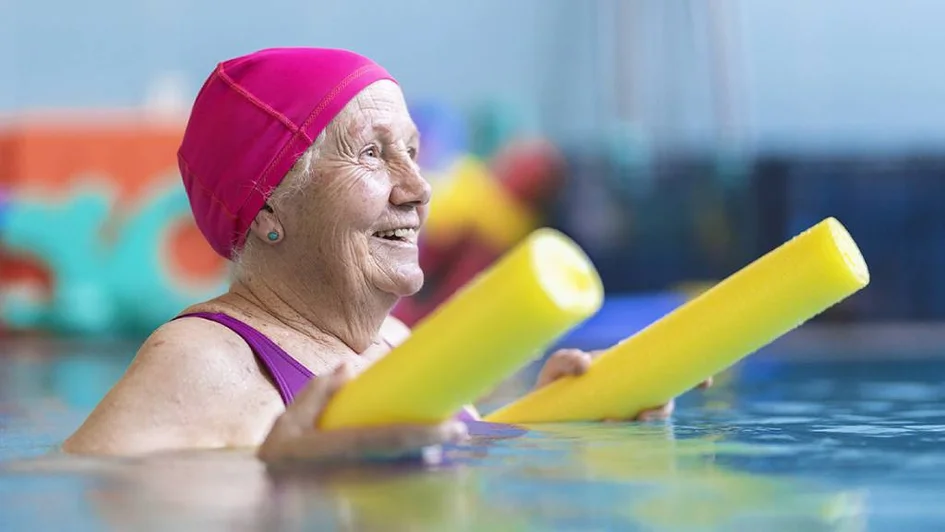
3. Aquatic Aerobics (Water Power)
Water is the ultimate environment for seniors. It provides “buoyancy,” which supports 90% of your body weight.
-
How to do it: Walk through the water in the shallow end, perform “water jogging,” or join a local Water Aerobics class.
-
PT Benefit: Water provides natural resistance in every direction. It’s like lifting weights and doing cardio at the same time, but with zero impact on your hips and ankles.
-
Tip: Wear water shoes to ensure you have good traction on the pool floor.
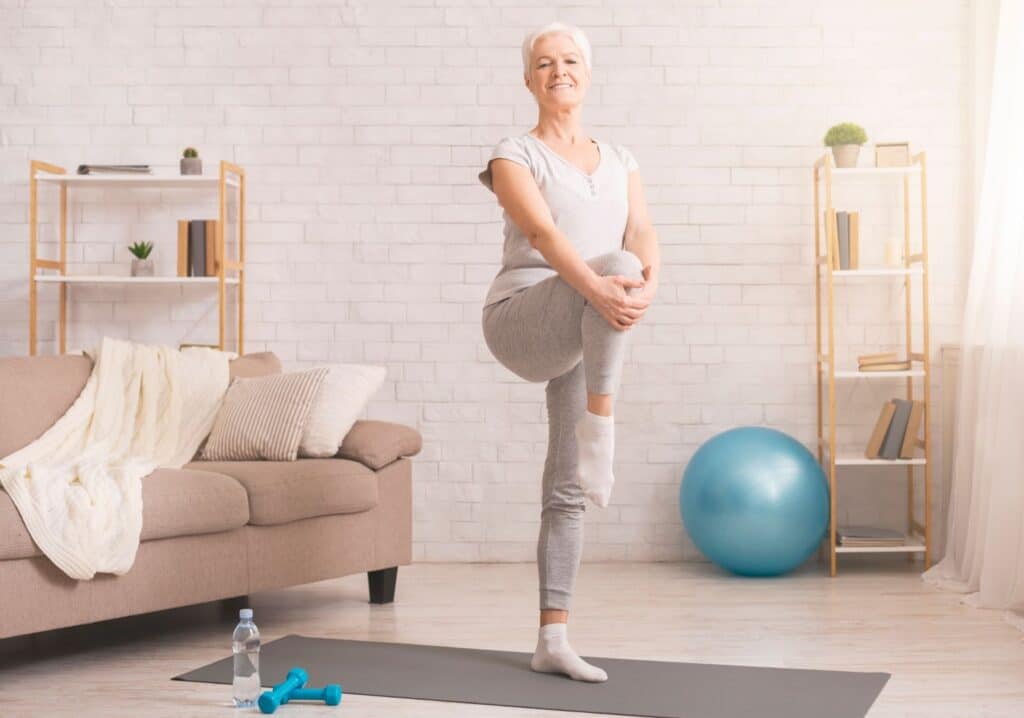
4. Step-Touch and Side-Steps
These are classic aerobic moves that improve coordination and lateral (side-to-side) stability—something we often lose as we age.
-
How to do it: Step to the right, touch your left foot to your right. Then step to the left, and touch your right foot to your left. Add gentle arm swings to increase the heart rate.
-
PT Benefit: This strengthens the gluteus medius, the muscle responsible for keeping your pelvis level. Strengthening this muscle is one of the best ways to prevent falls.
-
Tip: Do this in front of a counter or the back of a sturdy sofa so you have a “safety rail” within reach.
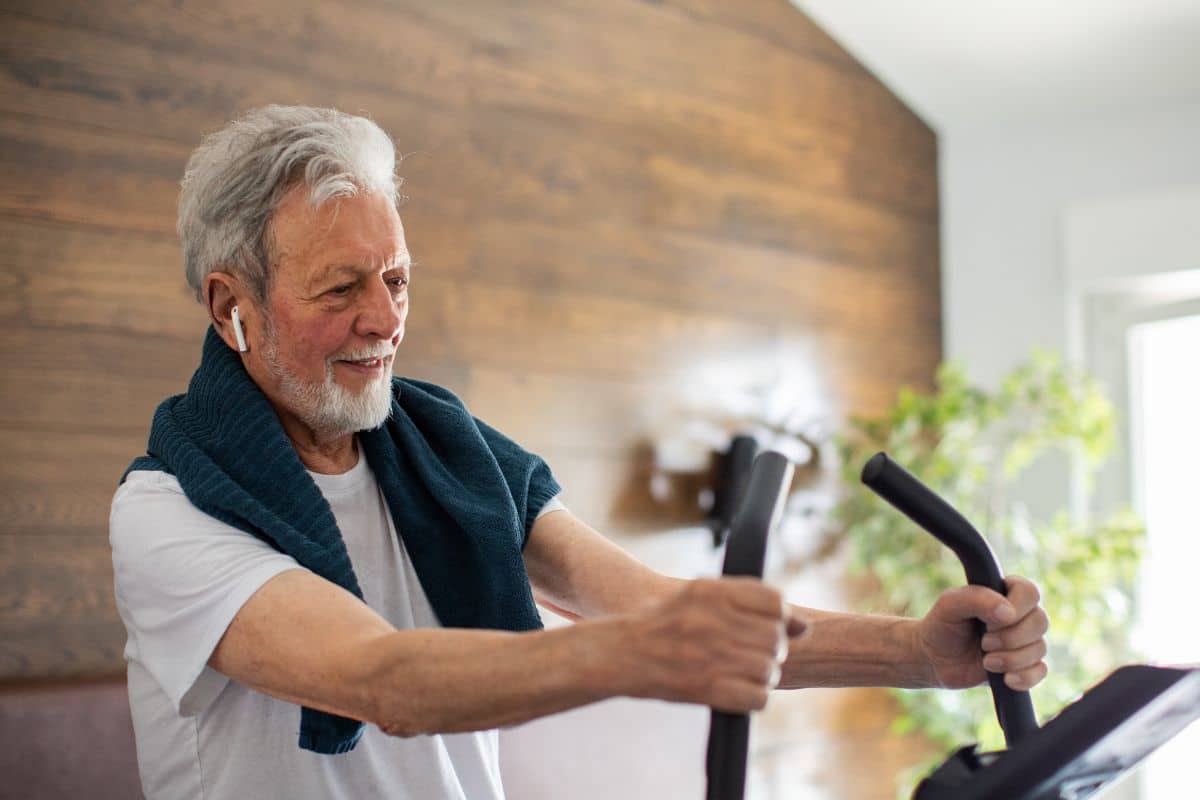
5. “Air Cycling” or Recumbent Biking
Stationary cycling is fantastic, but for many seniors over 70, a traditional upright bike can cause back pain.
-
How to do it: Use a recumbent bike (one with a backrest and the pedals in front of you) or lay on a firm bed and perform gentle “cycling” motions with your legs in the air.
-
PT Benefit: It provides a great aerobic burn while keeping the spine in a neutral, supported position.
-
Tip: Keep the resistance low but the speed consistent. Aim for a “steady spin” rather than a “heavy push.”
Joshua’s Safety Protocol for Cardio:
-
Warm Up & Cool Down: Never jump straight into fast movement. Spend 5 minutes doing slow stretches or slow walking to “wake up” the heart and joints.
-
Hydration is Non-Negotiable: As we discussed in our gift guide, seniors feel thirst less acutely. Drink a glass of water before and after your workout.
-
Listen to the “Red Flags”: If you feel chest pain, extreme dizziness, or sudden shortness of breath that doesn’t go away when you stop—stop immediately and contact your doctor.
Keep Your Heart Strong. Age at Ease.
Disclosure: As an Amazon Associate, I earn from qualifying purchases. This helps support our mission to provide expert safety advice to seniors and their families.
Read too: 5 Best Chair Yoga Poses for Seniors with Limited Mobility