
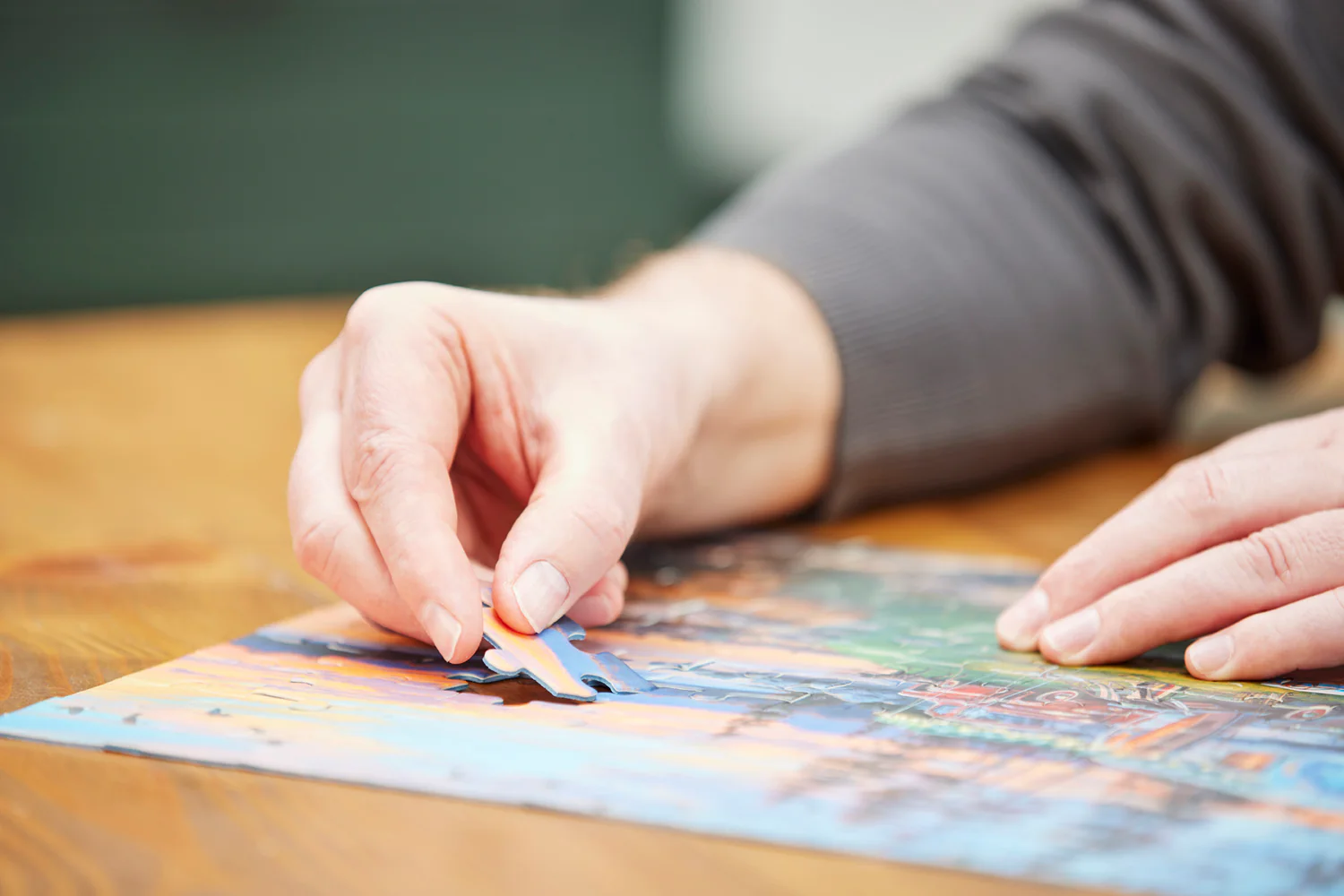
In my New York clinic, I always advocate for “Purposeful Play.” As we age, keeping the mind sharp is just as critical as keeping the legs strong. Jigsaw puzzles are fantastic for cognitive health, but for many of my patients with low vision, the tiny, dull-colored pieces of standard puzzles are impossible to see, leading to frustration instead of joy.
The good news is that the “Inclusive Design” movement has revolutionized the puzzle market. We now have puzzles with high-contrast colors, extra-large pieces, and non-glare finishes specifically designed for aging eyes.
As a Physical Therapist, I’ve reviewed these brands based on their visual clarity, ease of handling (tactile feel), and cognitive engagement. Here are my top 5 picks to help you “Age at Ease.”
1. The Gold Standard: Relish (formerly Active Minds) 13-Piece to 100-Piece Puzzles
Relish is a leader in dementia and low-vision care. Their puzzles are designed with input from medical professionals.
-
Why I Recommend It: The images are nostalgic, clear, and use vibrant, high-contrast colors. The pieces are made of thick, durable cardboard that is easy for arthritic fingers to grasp.
-
Pros: Beautiful, age-appropriate themes (no “childish” illustrations); the box includes a large reference image.
-
Cons: Fewer pieces mean they are completed quickly by high-functioning seniors.
-
Best For: Seniors with significant vision loss or early-to-mid stage dementia.
2. Best for High Contrast: Springbok “Puzzles To Go” (36-Piece)
Springbok has been a household name for decades, and their “Puzzles To Go” line features extra-large pieces with a unique, tight-locking fit.
-
Why I Recommend It: They use lithography techniques that create deep, saturated colors. For someone with macular degeneration, the ability to distinguish between “bright red” and “deep blue” is vital.
-
Pros: Pieces are 400% larger than standard ones; world-class image quality; “No-Duplicate” piece shapes.
-
Cons: The tight fit can sometimes require a bit of hand strength to push together.
-
Best For: Seniors who still want a challenge but need much larger visual cues.
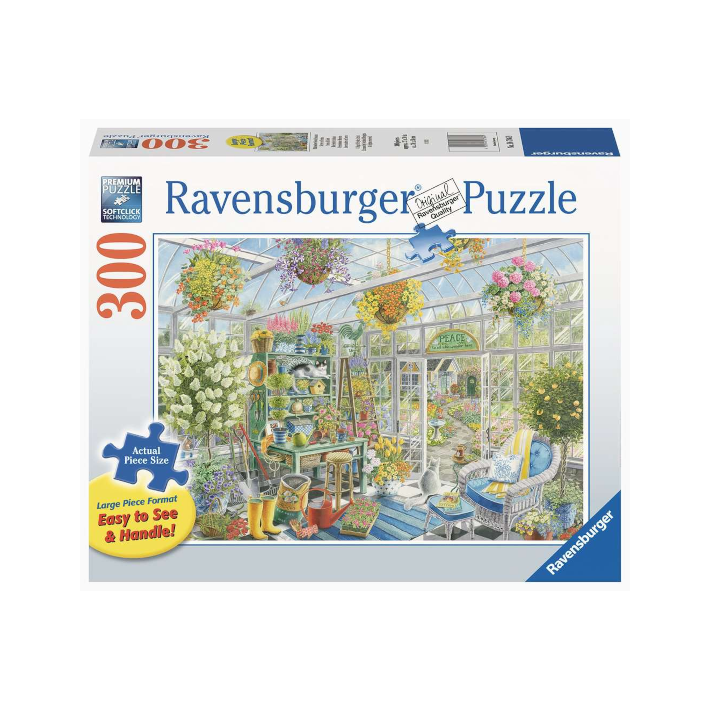
3. Best Non-Glare Finish: Ravensburger Large Format (300 to 500 Pieces)
Glare from overhead lights is a major enemy of low vision. Ravensburger uses a special “linen finish” to solve this.
-
Why I Recommend It: Their “Softclick Technology” ensures you hear a satisfying ‘click’ when the pieces fit, providing auditory confirmation that supplements your vision. The matte finish eliminates the “white spots” of light reflection on the puzzle surface.
-
Pros: Huge variety of landscapes and art; excellent quality control; glare-free surface.
-
Cons: 500 pieces might be overwhelming for those with very limited stamina.
-
Best For: Seniors with cataracts or light sensitivity who still want a complex, long-term project.
4. Best Tactile Experience: Mudpuppy Extra Large 12-Piece Puzzles
For those whose vision is extremely limited, the sense of touch becomes the primary guide.
-
Why I Recommend It: These pieces are nearly the size of a hand. They have very distinct, simple shapes that can almost be “felt” into place. The illustrations are modern and use very bold, thick outlines.
-
Pros: Extremely easy to handle; very thick “greyboard” that doesn’t bend; bright, modern colors.
-
Cons: Very low piece count.
-
Best For: Seniors with severe vision impairment and those who find small motor tasks difficult.
5. Best for Shared Activity: Bits and Pieces “Value Plus” 300-Piece Large Format
If you enjoy puzzling with grandchildren or friends, this brand offers the best balance of difficulty and accessibility.
-
Why I Recommend It: The pieces are large enough to see clearly but small enough that 300 pieces still feel like a “real” achievement. The themes often involve animals or country stores, which are great for sparking “Reminiscence Therapy” (talking about past memories).
-
Pros: Very affordable; large-scale art; great for social interaction.
-
Cons: Cardboard is slightly thinner than Ravensburger or Relish.
-
Best For: Social seniors who want to share their hobby with family.
Joshua’s “Vision-First” Puzzling Tips:
-
Lighting is Everything: Use a Task Lamp with a “Daylight” LED bulb (5000K–6500K). This mimics natural sun and provides the best color accuracy.
-
Magnification: Invest in a Hands-Free Desktop Magnifier. It allows you to look at the fine details of a piece without having to hold a glass in your hand.
-
The “Sort by Color” Rule: Use high-contrast trays (e.g., a white tray for dark pieces) to sort your colors first. This reduces “visual noise” and makes the process much calmer.
Keep Your Mind Bright. Age at Ease.
Disclosure: As an Amazon Associate, I earn from qualifying purchases. This helps support our mission to provide expert safety advice to seniors and their families.
Read too: 5 Best Brain Games for Seniors to Improve Memory: A PT’s Cognitive Health Guide