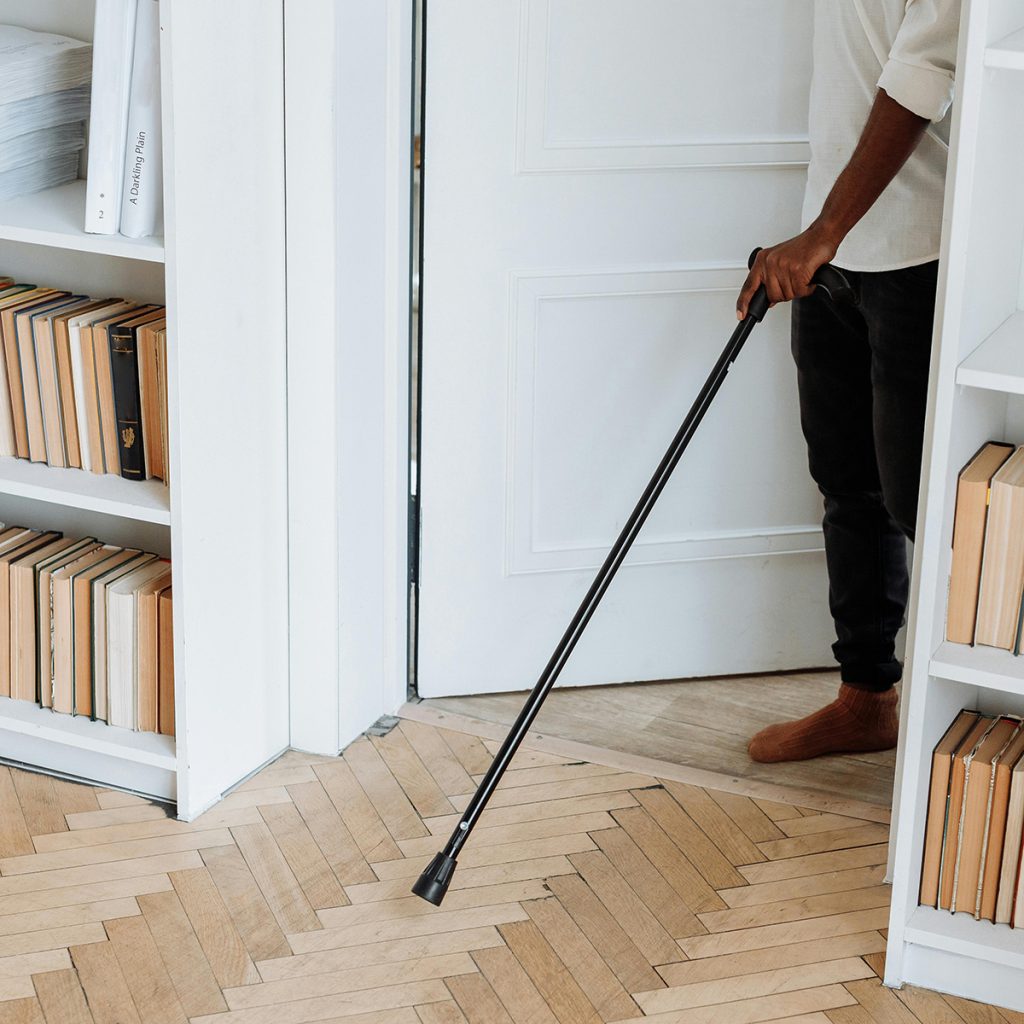
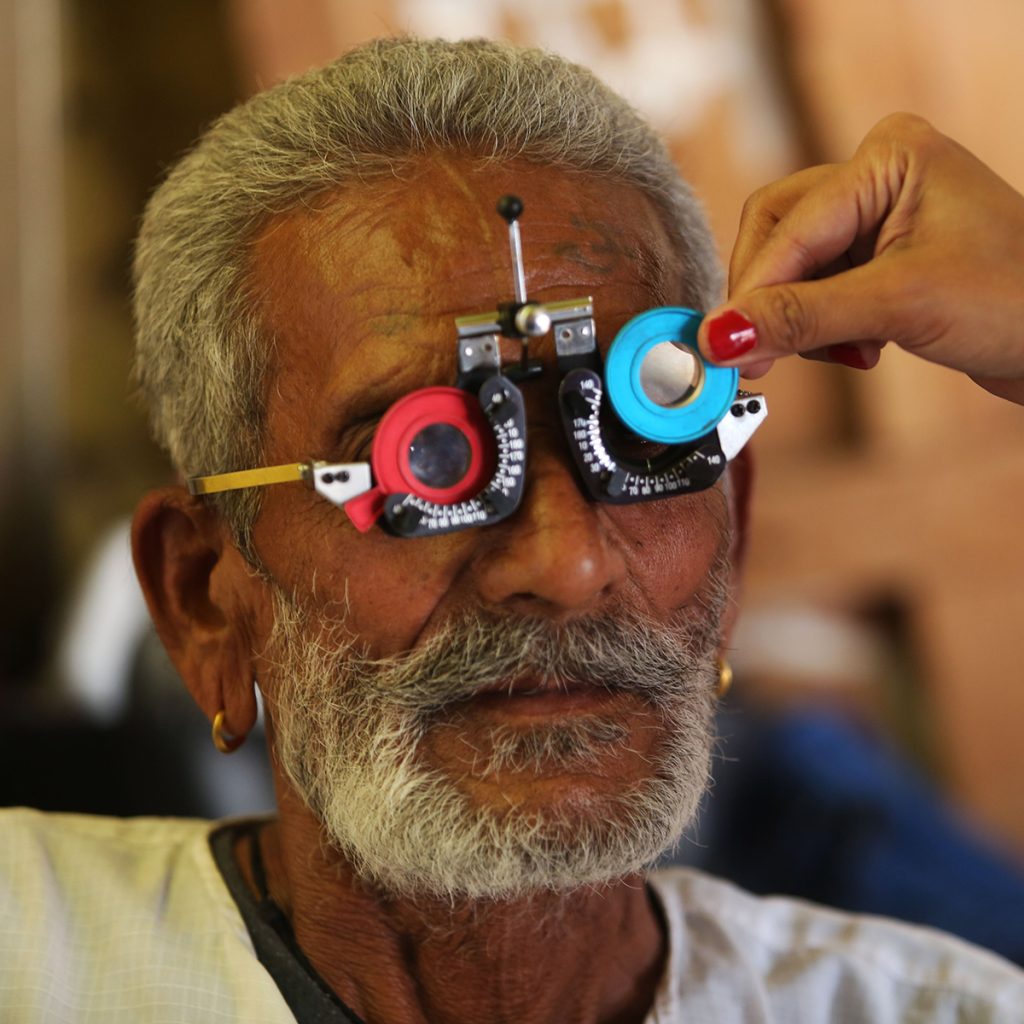
When I sit down with a senior and their family to build a personalized fall-prevention strategy, they usually expect me to talk about leg strength, balance exercises, and bathroom grab bars. They are often surprised when the very first question I ask is: “When was the last time you had a comprehensive eye exam with an optometrist?”
As a physical therapist, I treat the human body as an interconnected movement system. To maintain upright balance, your brain relies on three primary sensory inputs: your inner ear (vestibular system), your joints and muscles (proprioception), and your eyes (visual system).
Among these three, vision is the undisputed captain. Your eyes act as the early-warning radar for your feet. If your vision is compromised by blurry focus, poor depth perception, or undiagnosed eye diseases, your brain receives delayed or distorted spatial data. By the time your feet realize a doorstep is higher than expected or a rug is bunched up, gravity has already won. At Aging At Ease, we break down the clinical science behind vision loss and balance, and share the key optical safety adjustments available on Amazon to secure your home.
The Hidden Mechanisms: How Vision Changes Trigger Falls
Normal aging alters the architecture of the eye, but three specific visual declines directly sabotage a senior’s physical biomechanics:
-
Loss of Contrast Sensitivity: The inability to distinguish an object from its immediate background. To a senior with low contrast sensitivity, a beige carpet shifting into a beige concrete step looks completely flat.
-
Impaired Depth Perception: Difficulty judging exactly how close, far, high, or low an object is. This turns navigating everyday staircases or stepping off street curbs into a dangerous guessing game.
-
The “Bifocal Trap” on Staircases: While bifocal or progressive lenses are fantastic for reading, they present a massive physical hazard when walking outside. When a senior looks down through the lower portion of their bifocals to see where they are stepping, that reading zone blurs the ground, causing them to completely misjudge the edge of the stair.
Critical Age-Related Eye Conditions Linked to Injuries
During your annual vision check, eye specialists screen for the “Big Four” conditions that radically increase a patient’s statistical fall risk:
-
Cataracts: This clouding of the eye’s natural lens acts like a dirty windshield, creating massive glare and washing out contrast. Clinical studies show that undergoing timely cataract surgery reduces a senior’s fall risk by over 30%.
-
Glaucoma: Known as the “sneak thief of sight,” glaucoma slowly erodes peripheral (side) vision. Seniors lose the ability to spot trip hazards located in their lower or lateral sightlines without realizing it.
-
Macular Degeneration (AMD): Destroys central vision, making it incredibly difficult to read, recognize faces, or identify small changes in flooring textures right in front of your feet.
-
Diabetic Retinopathy: Causes patchy, blurred spots throughout the visual field, severely breaking up the continuous visual map the brain uses to navigate dynamic environments.
Joshua’s Vision-Supportive Environmental Matrix
While working with an optometrist to correct your physical prescription, you must optimize your physical living space to compensate for low-vision challenges. I recommend implementing these targeted upgrades available on Amazon:
| Environmental Vector | Visual Challenge | Corrective Safety Intervention |
| Staircase Edges | Blending steps due to poor contrast sensitivity. | Apply CarpetTrend High-Contrast Non-Slip Stair Treads or bright yellow Anti-Slip Safety Tape on Amazon to outline the exact edge of every riser. |
| Transient Lighting | Slow dark-to-light pupil adaptation when moving between rooms. | Install eufy by Anker Lumi Plug-In Smart Night Lights on Amazon along hallways. They feature ambient sensors that keep paths illuminated seamlessly. |
| Light Switching | Groping for small, dark light switches in a dim room. | Replace traditional small toggles with Lutron Claro Decora Rocker Light Switches on Amazon. Their large, high-contrast flat surface is easy to spot and operate. |
| Outdoor Transitions | Blinding daytime glare followed by dark porch shadows. | Transition to Wrap-Around Polarized Solar Shield Sunglasses on Amazon to eliminate blinding glare while keeping peripheral vision open. |
The PT’s Prescriptive Advice for Caregivers
If you are managing the care of an aging parent, integrate these three vision rules into their safety routine immediately:
1. Order a Dedicated “Distance-Only” Pair of Glasses: Ask your optometrist to write a prescription for a pair of single-vision glasses dedicated strictly to walking outside, navigating shopping centers, and climbing stairs. Leave the bifocals at home for reading and desk work.
2. Conduct the “Shadow Audit”: Walk through your parent’s home at dusk. Look for areas where single overhead bulbs cast long, deep shadows across walking paths. Shadows are frequently misinterpreted by low-vision seniors or those with cognitive decline as structural holes or physical obstacles, causing sudden, dangerous balance shifts.
3. Clean Optical Hardware Weekly: Smudged, scratched, or dusty eyeglasses can reduce light transmission into the eye by up to 20%. Keep a stockpile of Care Touch Lens Cleaning Wipes on Amazon in the living room to ensure crystal-clear visual clarity every single day.
Water Aerobics: The Best Joint-Friendly Exercise for Active Seniors
See Clearly. Walk Confidently. Aging at Ease.
Disclosure: As an Amazon Associate, I earn from qualifying purchases of home safety lighting, high-contrast stair markers, and vision-assist accessories. This helps support our independent, evidence-based fall prevention research at Aging At Ease.