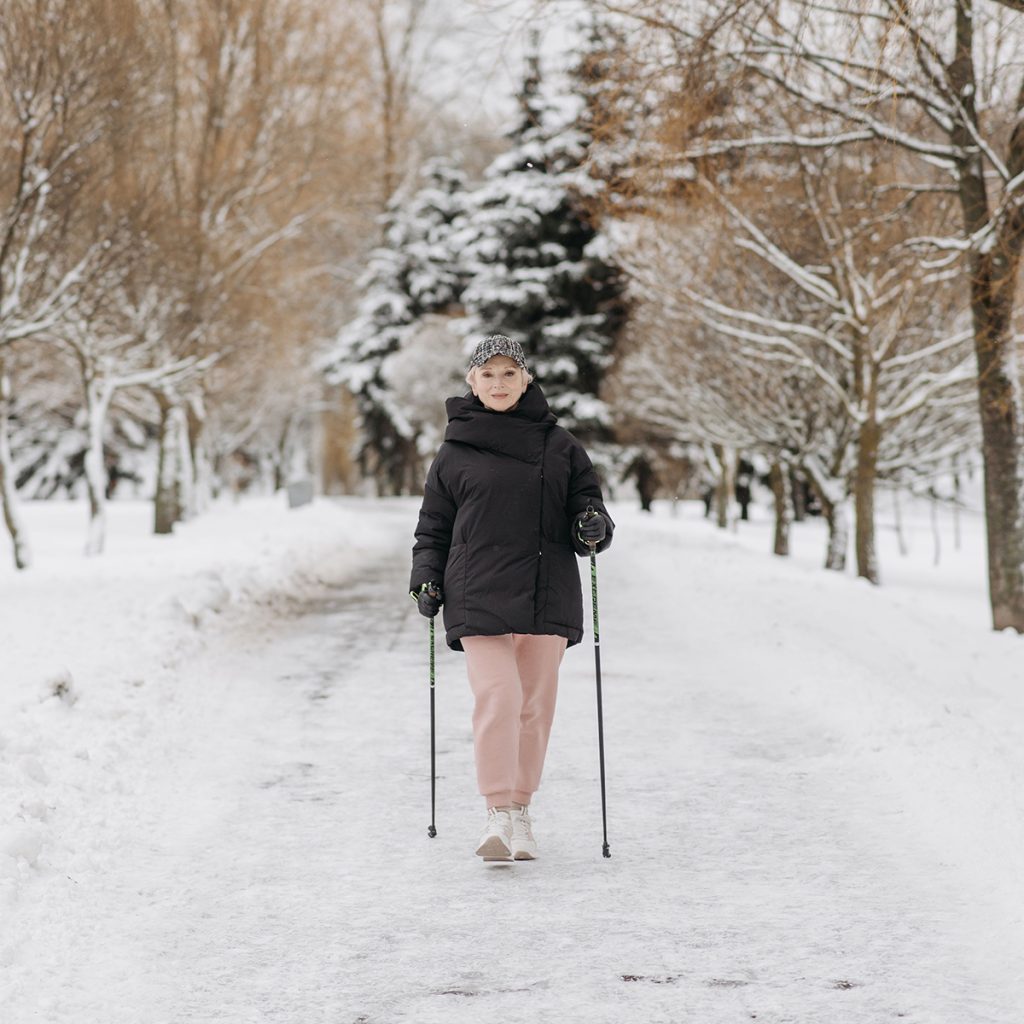
Every year, as the first major freeze turns neighborhood sidewalks into slick, glazed sheets of black ice, my outpatient physical therapy schedule fills up with the exact same injuries: wrist fractures from catching a fall, severe hip contusions, and sudden lower-back strains.
When the temperature drops, older adults face a tough choice: stay trapped inside for weeks or risk a dangerous fall every time they walk to the mailbox or car.
When you slip on ice, the fall happens in milliseconds. Your foot shoots out from under your center of gravity, leaving your brain zero time to execute a balance-correcting reaction.
To make matters worse, cold winter air stiffens joints and slows nerve conduction. This impairs your reaction time precisely when you need it most.
Staying safe during winter isn’t about avoiding the outdoors completely—it’s about adapting your gait biomechanics and equipping your winter boots with traction-enhancing gear. Let me break down the clinical physics of walking on ice, share the famous “Penguin Walk” technique, and review the best winter fall-prevention tools on Amazon.
The Biomechanics of the Ice Slip: Normal Gait vs. Frictionless Gait
To understand why winter falls are so severe, you have to look at how we normally walk.
During a standard stride on dry concrete, you strike the ground with your heel at a forward angle. Your body relies on high surface friction to push your weight forward onto your stance leg.
When you try to use that same heel-strike gait on slick ice, friction drops to near zero. Your forward momentum pushes your heel forward like a sled on snow, causing your feet to fly out ahead of you while your torso crashes backward onto the hard ground.
The Clinical “Penguin Walk” Mechanics
To walk safely on slippery surfaces, you must switch to a frictionless vertical gait, commonly known in physical therapy as the Penguin Walk:
-
Flat-Footed Plant: Abandon the sharp heel-to-toe roll. Place your foot down flatly so the entire rubber sole contacts the ice simultaneously, maximizing surface area.
-
Widen Your Base of Support: Point your toes slightly outward and widen your feet by 2 to 4 inches. This broadens your lateral balance base and keeps your hips centered.
-
Keep Your Weight Over the Lead Foot: Keep your knees slightly bent and lean your torso slightly forward so your center of gravity sits directly over your front foot, rather than leaning back.
-
Take Short, Shuffling Steps: Keep your strides small. Short steps prevent your feet from extending past your pelvic center, eliminating the horizontal force vector that triggers slips.
Technical Vetting: Winter Traction Gear Comparison
Equipping your winter boots with proper traction gear transforms how your body interacts with icy ground.
| Feature Profile | Steel Coil Traction (e.g., Yaktrax Walk) | Carbide/Steel Spiked Cleats (e.g., Ice Trekkers) | Flip-Down Cane Ice Attachments |
| Grip Engine | High-strength steel coils wrapped around rubber webbing. | Hardened steel spikes that bite directly into packed ice. | A steel crown spike clamped to the bottom of a walking cane. |
| Best Surface Fit | Packed snow, light slush, and thin ice patches. | Thick glare ice, black ice, and frozen outdoor inclines. | Icy walkways for individuals who already rely on a cane. |
| Indoor Transition Danger | High. Coils skid on smooth tile, hardwood, or store floors. | Extreme. Spikes act like ice skates on smooth indoor floors. | Zero. The steel spike flips up, exposing the rubber cane tip. |
| Ease of Application | Moderate; stretches over boot toe and heel. | Moderate; requires stretching heavy rubber over winter boots. | Easy; single screwdriver installation onto lower cane shaft. |
| Estimated Cost | Budget ($15 – $25) | Mid-Range ($25 – $45) | Very Budget-Friendly ($10 – $18) |
Top-Rated Winter Fall-Prevention Gear on Amazon
To build a reliable winter setup, consider these field-tested Amazon accessories:
1. Best Overall for Everyday Walkways: Yaktrax Walk Traction Cleats
The ultimate stretch-on traction accessory for navigating snowy neighborhood sidewalks and icy driveways.
-
Why I Recommend It: Yaktrax uses a flexible outer band with 1.2mm steel coils that provide 360 degrees of traction on packed snow and ice. The coils press into the snow as you walk, creating dozens of bite points without requiring razor-sharp metal spikes.
-
The Safety Advantage: They are lightweight and stretch easily over standard winter boots or walking shoes. They give older adults the traction confidence needed to retrieve the morning mail or walk to the car without changing their natural stride.
2. Best for Deep Glare Ice & Sloped Paths: Yaktrax Diamond Grip All-Surface Cleats
The heavy-duty choice for seniors who live in northern climates with frequent freezing rain, steep icy driveways, or unplowed paths.
-
Why I Recommend It: Diamond Grips feature articulated steel beads strung along aircraft-grade steel cable. The square edges of the beads bite into hard-packed ice with exceptional holding power.
-
The Clinical Benefit: Unlike flat rubber cleats that clog with wet snow, the rotating diamond beads shed snow naturally as you step, keeping your tread clear and your footing secure.
3. Best for Cane Users: Drive Medical Heavy-Duty Cane Ice Attachment
An essential, inexpensive winter upgrade for anyone who uses a standard walking cane or quad cane.
-
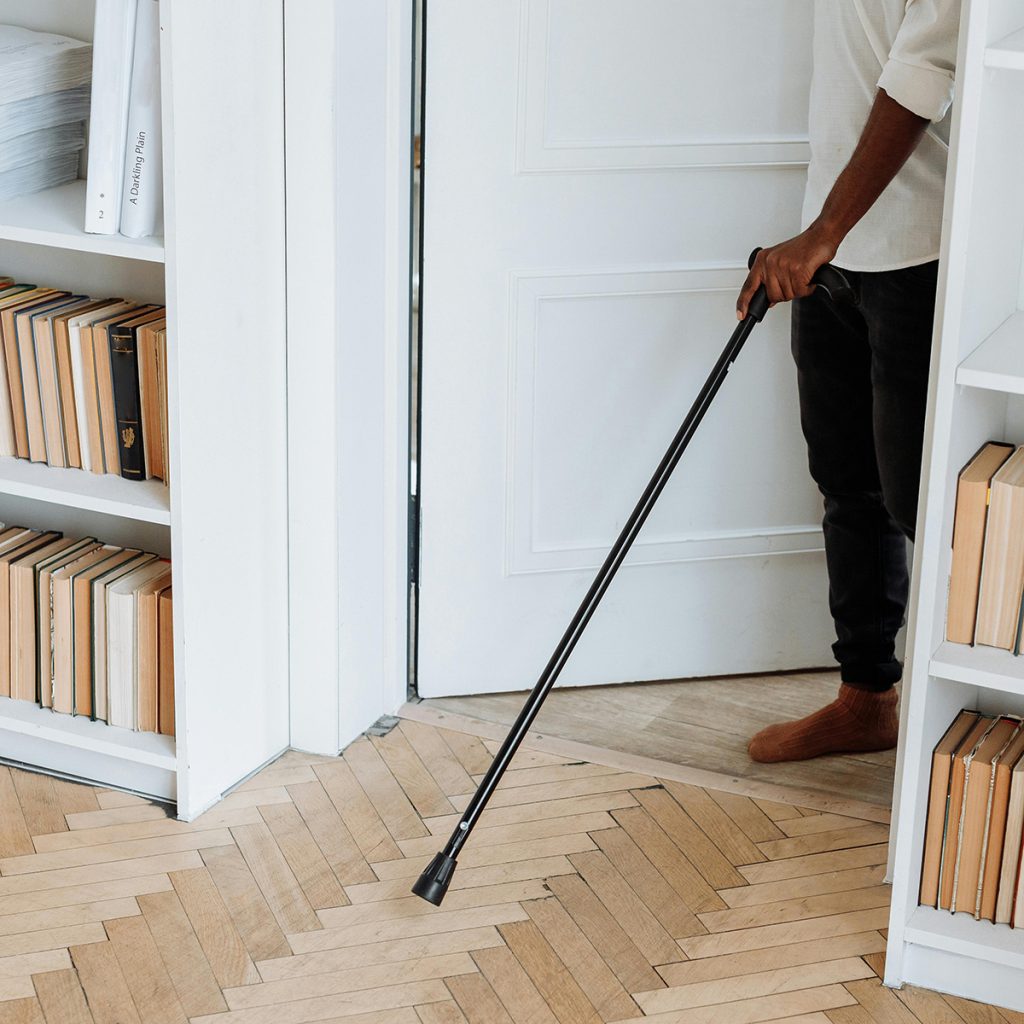
Why I Recommend It: A standard rubber cane tip turns slick as glass on ice, sliding away the second you put weight on it. This steel attachment clamps onto your existing cane shaft. With a simple push of two buttons, five sharp steel prongs flip down past the rubber tip to dig into ice.
-
The Clinical Advantage: When you step inside a grocery store or bank, simply flip the steel prongs up. The standard rubber tip engages immediately, so you won’t slip on smooth indoor floors.
4. Best Home Entryway Traction Buffer: Safe Step 6300 Enviro-Melt Ice Melt
A crucial chemical defense to clear your porch steps and walkway before stepping outside.
-
Why I Recommend It: Safe Step 6300 uses a specialized heat-generating formula that melts ice down to -10°F while remaining safer for pet paws, surrounding vegetation, and concrete walkways compared to harsh rock salt.
Joshua’s 4-Step Winter Walking Protocol
To navigate icy paths safely, follow this clinical sequence before stepping out the front door:
FAQ: Critical Questions Regarding Winter Fall Safety
Q: Can I wear my Yaktrax or ice cleats inside a grocery store?
A: No. This is a common and dangerous mistake. Steel coils or spikes cannot bite into tile or polished concrete. Wearing ice cleats on smooth indoor floors creates a roller-skate effect. Always remove them at the store entrance, or use a Drive Medical Cane Ice Attachment flipped up to its rubber tip.
Q: How do I identify black ice before I step on it?
A: Black ice is a thin, highly transparent layer of ice that blends seamlessly into dark asphalt or concrete. Assume any pavement that looks unusually dark, wet, or shiny in freezing temperatures is black ice. Pay special attention to shaded areas, spot-melt runoff from roofs, and step down carefully near curb cuts.
Q: What should I do if I feel myself falling on ice?
A: If a fall is inevitable, do not tense up or stretch your arms straight out with locked elbows, as this often leads to wrist fractures. Instead, try to tuck your chin to protect your head, bend your elbows, and roll onto the fleshy side of your thigh or buttocks to distribute the impact force safely.
The PT Verdict: Winter weather doesn’t have to keep you housebound. Slipping on ice is a mechanical failure that you can prevent with the right gait adjustments and gear. By practicing the Penguin Walk, equipping your winter boots with Yaktrax Cleats, and winterizing your cane with a Drive Medical Ice Spike, you protect your balance, safeguard your bones, and stay active all winter long.
Widen Your Stance. Walk Like a Penguin. Aging at Ease.
Disclosure: As an Amazon Associate, I earn from qualifying purchases of traction cleats, cane ice attachments, pet-safe ice melt, and winter safety gear. This helps support our independent senior fall-prevention research labs at Aging At Ease.