
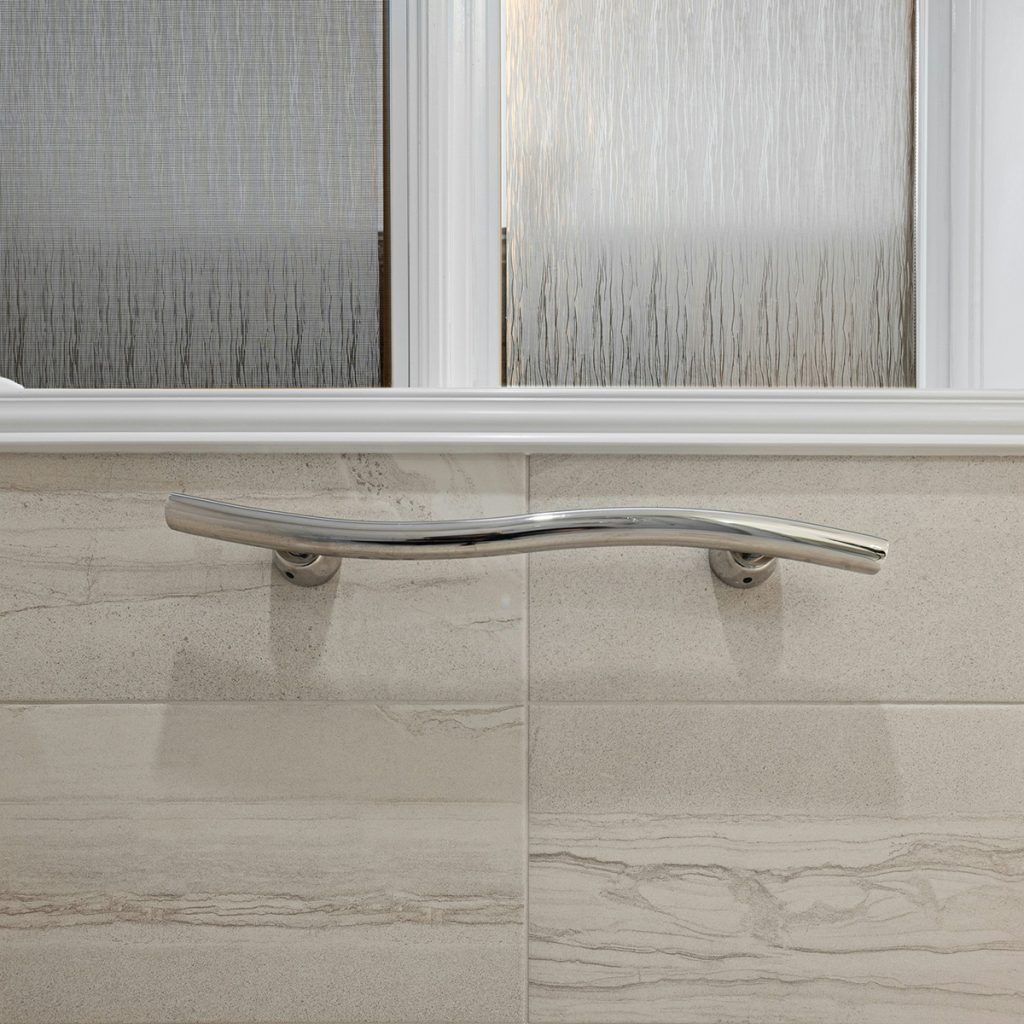
In my clinic, I often hear, “Joshua, I know I need a grab bar in the shower, but my landlord won’t let me drill into the tile,” or “I’m afraid I’ll crack the porcelain if I use a power drill.” These are valid concerns, but leaving your bathroom without support is a risk you simply cannot afford to take.
Fortunately, modern home medical equipment has evolved. Today, we have high-quality, heavy-duty safety rails that utilize advanced vacuum-suction technology or secure clamp systems. They provide rock-solid stability without requiring a single hole in your wall.
As a Physical Therapist, I want to emphasize: non-drill rails are excellent for balance support and stabilizing yourself, but they require strict, proper installation to be safe. Here is my step-by-step guide to installing them flawlessly.
Choosing Your System: Suction Bars vs. Tub-Rail Clamps
Before buying, you need to select the right tool for the right location:
-
Suction Grab Bars: Best for inside the shower or next to the tub. They stick directly to flat, non-porous surfaces like tile or glass.
-
Tub-Rail Clamps: Best for getting in and out of the bath. These are steel or composite rails that clamp tightly over the edge of your porcelain or fiberglass bathtub wall.
Phase 1: Installing a Suction Safety Rail
Phase 2: Installing a Tub-Rail Clamp
If you need help stepping over the high wall of a traditional bathtub, a clamp-on rail is your best option.
⚠️ Joshua’s Mandatory PT Safety Rule: The “Yank Test”
Suction and clamp-on rails are held in place by friction and vacuum pressure, which can naturally change with temperature fluctuations and steam.
You must perform the “Yank Test” before every single shower. Grab the bar and give it a vigorous pull in all directions. If it wobbles, shifts, or the safety indicator shows even a hint of red, detach it and re-install it before stepping into the tub.
Joshua’s PT Advice for Shower Safety:
While non-drill rails are a fantastic invention, please remember their mechanical limits. These bars are meant to help you maintain balance, stabilize yourself while standing, and pull yourself up slightly. They are not designed to support your full body weight during a dead fall.
If you or your loved one completely relies on a grab bar to transfer out of a wheelchair or requires maximum weight support, it is time to invest in a permanently anchored, drilled grab bar or use a sturdy Shower Chair combined with non-slip mats.
Protect Your Balance. Secure Your Space. Aging at Ease.
How to Choose the Right Grab Bar: Suction vs. Permanent — A PT’s Safety Guide
Disclosure: As an Amazon Associate, I earn from qualifying purchases of home safety and adaptive bathroom equipment. This helps support our mission at Aging At Ease to provide expert advice for independent, injury-free living.