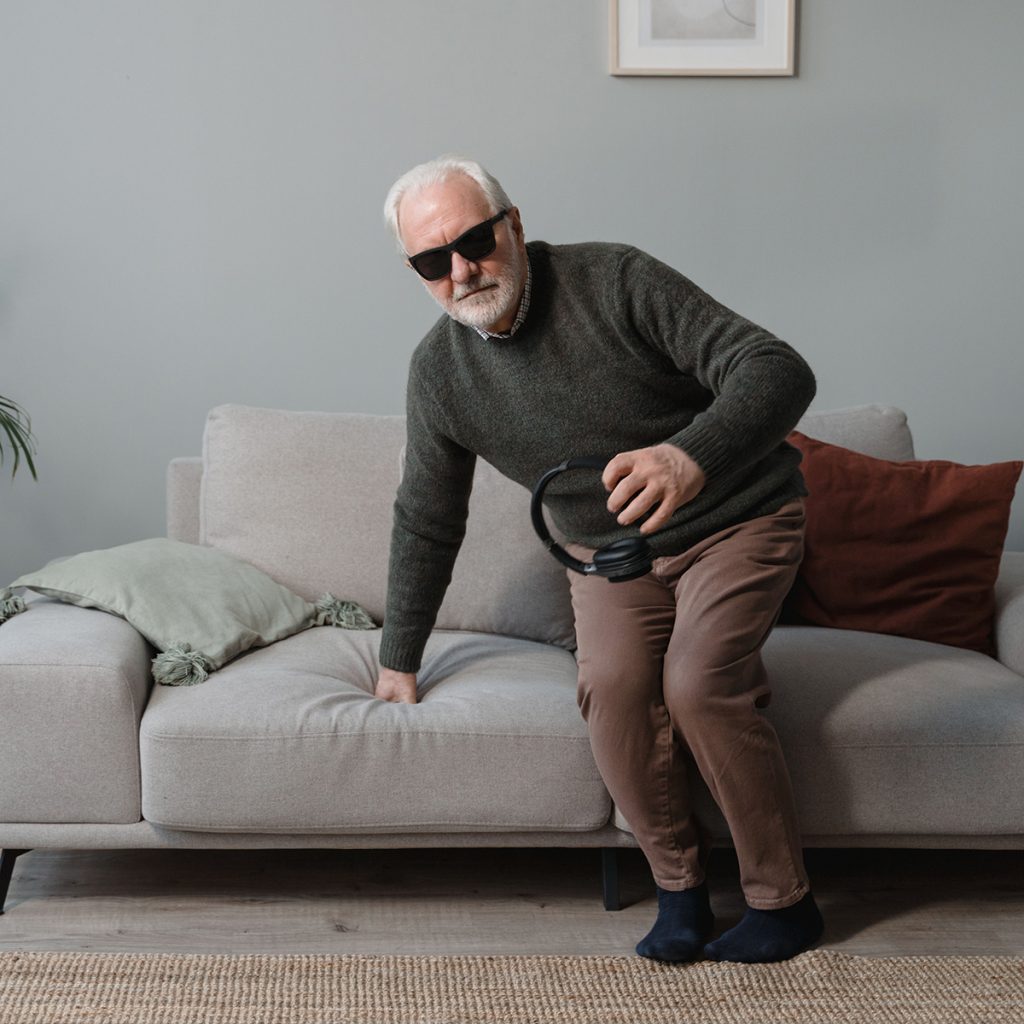
In my career as a physical therapist, I have analyzed hundreds of domestic fall scenarios. While much of our focus at Aging At Ease is naturally dedicated to prevention—installing grab bars, clearing clutter, and improving lighting—there is an equally critical survival skill that every single senior and caregiver must master: the post-fall response workflow.
Statistically, the moments immediately following a fall are filled with intense psychological panic, a massive spike in adrenaline, and acute embarrassment. Because of this, an older adult’s involuntary instinct is to immediately attempt to scramble back to their feet as quickly as possible.
This frantic, unassessed movement is highly dangerous. If a senior has sustained an undetected fracture in their hip, pelvis, or wrist, forcing immediate weight-bearing dynamic pressure onto that joint can displace the bone, sever local blood vessels, and cause catastrophic secondary soft-tissue trauma. Furthermore, scrambling without a mechanical anchor usually induces a second, high-impact fall.
Conversely, if a senior is uninjured but lacks the technique to get up, they risk experiencing a “long lie”—remaining immobilized on the floor for over an hour. This can lead to rapid hypothermia, dehydration, and pressure-induced muscle breakdown (rhabdomyolysis).
Knowing exactly how to pause, assess, roll, and ascend using proper biomechanical leverage is a life-saving tool. Here is the step-by-step clinical blueprint on how to safely navigate the floor after a fall.
The “Pause and Assess” Rule: The First 60 Seconds
The absolute first rule of falling is: Do not move right away. Treat the floor as a temporary safety zone while your nervous system processes the shock.
-
Control the Breathing: Inhale deeply through your nose and exhale slowly through pursed lips. This counteracts the adrenaline panic and drops your heart rate, allowing you to think logically.
-
The Body-Scan Inventory: Starting from your toes and moving upward, gently wiggle your joints. Check your ankles, bend your knees slightly, move your fingers, and gently turn your head.
-
The Pain and Bleeding Check: Ask yourself: Is there sharp, localized pain anywhere? Can I move my leg without deep pelvic discomfort? Am I bleeding or dizzy?
-
The Absolute Stop Signal: If you feel severe pain in your hip, back, or neck, or if you suspect something is broken, do not attempt to get up. Your exclusive goal shifts to calling for emergency assistance immediately while keeping your spine perfectly static.
The Biomechanical Step-by-Step Ascent Protocol
If your body scan reveals zero severe pain, no major swelling, and you are fully confident in your limb strength, execute this exact mechanical sequence to get off the floor safely:
Essential Post-Fall Emergency Tools on Amazon
If a senior executes their body scan and realizes they cannot get up due to weakness or joint pain, having specialized mechanical lift or communication tools close to floor level is paramount.
1. Best for Emergency Electronic Lifelines: Alexa Emergency Assist / Echo Dot (5th Gen)
When a senior is pinned on the floor, they cannot reach a smartphone sitting high on a kitchen counter. Voice-activated networks save lives.
-
Why I Recommend It: Placing an Echo Dot on a low-clearance shelf or nightstand allows a fallen senior to simply shout, “Alexa, call for help!” The Alexa Emergency Assist ecosystem instantly connects them to a 24/7 urgent response agent who knows their medical history and can dispatch 911.
-
The Amazon Assist: Purchase the Amazon Echo Dot (5th Gen) and subscribe to the Alexa Emergency Assist service for hands-free floor safety.
2. Best for In-Home Caregiver Mechanical Leverage: Mangar Elk Inflatable Emergency Lifting Cushion
An incredible, professional-grade pneumatic tool designed for families and caregivers to lift a fallen loved one off the floor without risking severe spinal lifting injuries to themselves.
-
Why I Recommend It: If a parent falls frequently but isn’t injured, caregivers often hurt their own backs trying to pull them up manually. The senior simply crawls onto this flat, deflated cushion on the floor. With the push of a button, the battery-powered compressor inflates the cushion vertically into a rigid, highly stable chair height.
-
The Amazon Assist: Invest in the Mangar Elk Inflatable Emergency Lifting Cushion on Amazon to permanently remove manual lifting strain from your home care routine.
3. Best Simple Low-Tech Floor Safety: Liberty Lift Assist Handle
A beautifully simple, non-motorized ergonomic leverage tool that bridges the gap between two people during an assisted stand.
-
Why I Recommend It: This rigid, heavy-duty handle features dual-textured grip bars. The senior holds one side, the caregiver holds the other, and it provides a safe, slip-free structural lever to help pull the senior up into a stable posture without any dangerous skin-to-skin pulling on fragile wrists or shoulders.
-
The Amazon Assist: Secure the Liberty Lift Assist Handle on Amazon to keep tucked away in your living room closet.
What to Do If You Cannot Get Up
If you are alone and discover you lack the physical power to climb onto hands and knees, execute this defensive survival protocol:
-
Signal Immediately: Sound your PERS pendant, shout loudly to activate your smart speaker, or use a low-lying object (like a shoe) to bang rhythmically against a wall or door to alert neighbors.
-
Insulate Against Hypothermia: If you are resting on cold tile or hardwood, try to pull a throw rug, couch cushions, or a nearby blanket underneath your body to protect your core temperature.
-
Change Positions Slightly: To prevent localized pressure sores and muscle binding, try to subtly shift your weight every 15 to 20 minutes while waiting for emergency services to arrive.
The PT Verdict: Falling is an emergency, but getting up incorrectly shouldn’t double the trauma. By training your mind to pause, roll to all fours, crawl to furniture, and launch with your strongest leg, you neutralize the panic and take physical command of your recovery. Talk about this blueprint with your family, practice the crawling motion during wellness days, and stay protected.
Assess First. Move Safely. Aging at Ease.
Water Aerobics: The Best Joint-Friendly Exercise for Active Seniors
Disclosure: As an Amazon Associate, I earn from qualifying purchases of voice-activated smart speakers, emergency pneumatic lifting cushions, and ergonomic manual lift handles. This helps support our independent physical therapy safety education labs at Aging At Ease.